How do you play A Victory Lost: Crisis in Ukraine 1942-1943?
The primary objective for the Soviet player is to advance their forces across the map to reach specific strategic locations, indicated by markers, by certain turn deadlines. The German player's objective is to prevent these Soviet advances, hold defensive lines, and avoid encirclement or isolation of their units. The video highlights the Soviet player's current position being significantly behind their target for Turn 2, indicating a struggle to meet objectives.
To find the best price for A Victory Lost: Crisis in Ukraine 1942-1943, howtoplay.ro compares deals from Romanian shops every day.
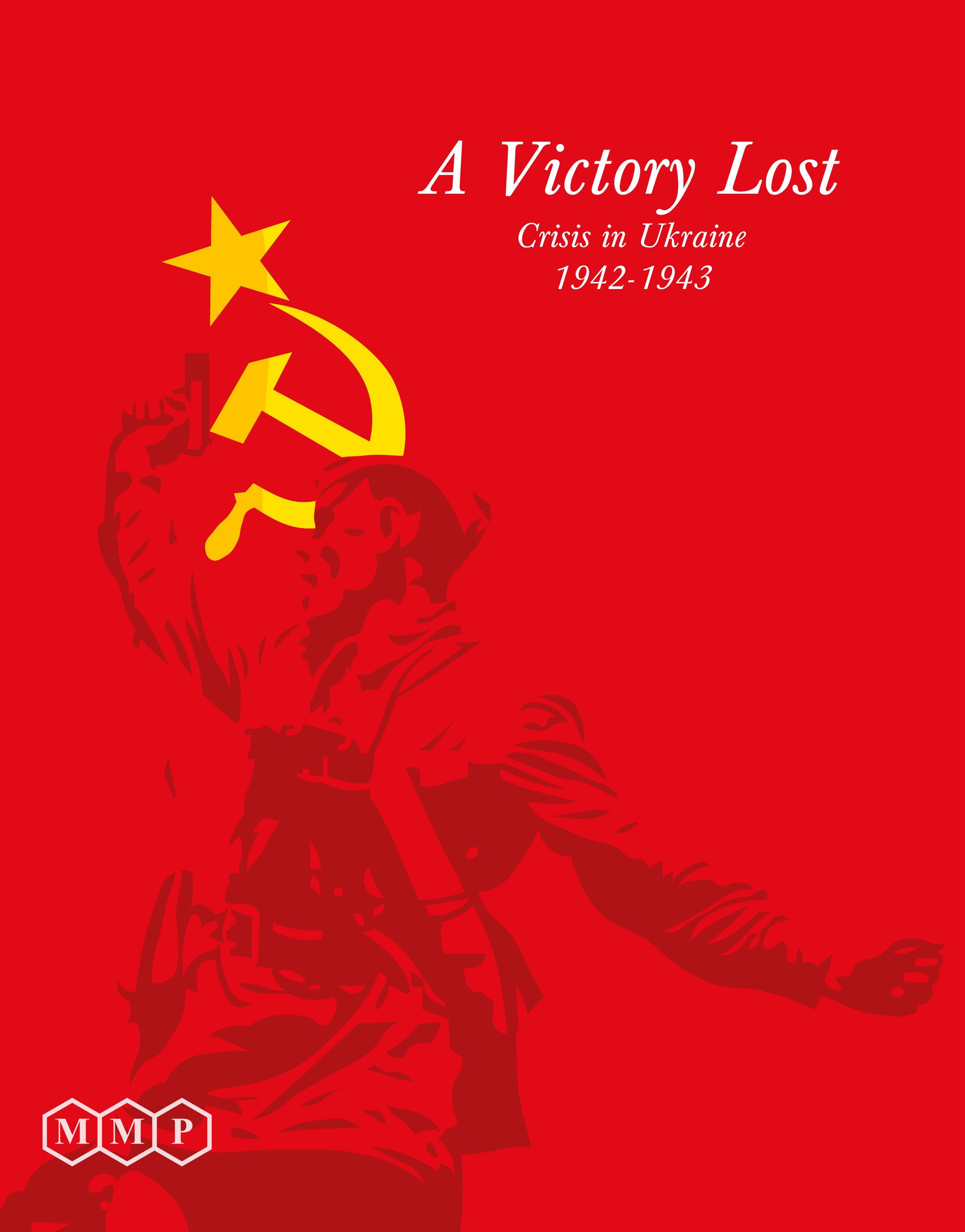
official art · Multi-Man Publishing
the rules in 60 seconds▶ auto · 1/6
🧩
01
Setup
The game board is set up with various units representing German, Romanian, Hungarian, and Italian forces, as well as Soviet units, positioned across a map of Ukraine.
The rules, step by step
Setup
The game 'A Victory Lost: Crisis in Ukraine 1942-1943' is set up on a large hexagonal map representing the Ukrainian front. Various units, including German, Romanian, Hungarian, and Italian forces, are deployed, primarily forming a defensive line. Soviet units are positioned to advance. The current state shows Turn 2 completed, covering December 28th to January 7th, 1942-1943. The map also features road and river networks, which influence unit movement and strategic positioning.
Objective
The primary objective for the Soviet player is to advance their forces across the map to reach specific strategic locations, indicated by markers, by certain turn deadlines. The German player's objective is to prevent these Soviet advances, hold defensive lines, and avoid encirclement or isolation of their units. The video highlights the Soviet player's current position being significantly behind their target for Turn 2, indicating a struggle to meet objectives.
On your turn
The game proceeds in turns, with each turn representing a specific period of time. Turn 2, covering December 28th to January 7th, 1942-1943, has just concluded. During a turn, players move their units, engage in combat, and manage supply lines. The video mentions that the Soviet player rolled high on dice, suggesting successful combat or movement rolls, while the German player is facing challenges with unit isolation and command limitations.
Scoring
While specific scoring rules are not detailed in the video, the commentary implies that the Soviet player's success is measured by their ability to reach designated map locations by specific turns. Failing to reach these locations, such as the river line mentioned, by the expected turn suggests a setback for the Soviet player. The German player's success is tied to preventing these Soviet advances and maintaining their defensive integrity.
Game end
The video does not explicitly state the game's end conditions, but it is understood that the game continues over multiple turns, likely until a certain number of turns have passed or specific victory conditions are met by either side. The ongoing strategic considerations, such as protecting Kharkov later in the game, suggest a long-term campaign scenario.
Tips
For the German player, a key tip is to consider strategic retreats, such as giving up river lines and falling back, to consolidate forces and avoid unit isolation, especially for allied units like the Romanians. Strengthening defensive positions, particularly around critical cities like Kharkov, is crucial for later stages of the game. Maintaining command presence is also vital, as the lack of German command in certain areas limits the activation and effectiveness of allied units, such as the Italians.
🔬 game anatomy
Complexity2.5 / 5
BGG rating7.6 / 10
Vibe
CouplesStrategy
Language dependence
No in-game text needed
🌐 plays without English
Play time
360 min
Players
2
Recommended age
12+ yrs
BGG rank
#2.383
✨ from Trișache · verified
Frequently asked questions
Q1What is the goal of the game?
The primary objective for the Soviet player is to advance their forces across the map to reach specific strategic locations, indicated by markers, by certain turn deadlines. The German player's objective is to prevent these Soviet advances, hold defensive lines, and avoid encirclement or isolation of their units. The video highlights the Soviet player's current position being significantly behind their target for Turn 2, indicating a struggle to meet objectives.
Q2How do you set up the game?
The game 'A Victory Lost: Crisis in Ukraine 1942-1943' is set up on a large hexagonal map representing the Ukrainian front. Various units, including German, Romanian, Hungarian, and Italian forces, are deployed, primarily forming a defensive line. Soviet units are positioned to advance. The current state shows Turn 2 completed, covering December 28th to January 7th, 1942-1943. The map also features road and river networks, which influence unit movement and strategic positioning.
Q3How does a turn work?
The game proceeds in turns, with each turn representing a specific period of time. Turn 2, covering December 28th to January 7th, 1942-1943, has just concluded. During a turn, players move their units, engage in combat, and manage supply lines. The video mentions that the Soviet player rolled high on dice, suggesting successful combat or movement rolls, while the German player is facing challenges with unit isolation and command limitations.
Q4How is scoring calculated?
While specific scoring rules are not detailed in the video, the commentary implies that the Soviet player's success is measured by their ability to reach designated map locations by specific turns. Failing to reach these locations, such as the river line mentioned, by the expected turn suggests a setback for the Soviet player. The German player's success is tied to preventing these Soviet advances and maintaining their defensive integrity.
Q5When and how does the game end?
The video does not explicitly state the game's end conditions, but it is understood that the game continues over multiple turns, likely until a certain number of turns have passed or specific victory conditions are met by either side. The ongoing strategic considerations, such as protecting Kharkov later in the game, suggest a long-term campaign scenario.
Q6What tips are there for beginners?
For the German player, a key tip is to consider strategic retreats, such as giving up river lines and falling back, to consolidate forces and avoid unit isolation, especially for allied units like the Romanians. Strengthening defensive positions, particularly around critical cities like Kharkov, is crucial for later stages of the game. Maintaining command presence is also vital, as the lack of German command in certain areas limits the activation and effectiveness of allied units, such as the Italians.
Q7How much does A Victory Lost: Crisis in Ukraine 1942-1943 cost?
No store is currently tracking A Victory Lost: Crisis in Ukraine 1942-1943. Check the Prices tab — you can set a price alert to be notified when it appears.
Q8Where can I buy A Victory Lost: Crisis in Ukraine 1942-1943 cheapest?
Check the Prices tab — howtoplay.ro aggregates offers from 7+ Romanian board-game stores and tracks price history.
Q9How do you play A Victory Lost: Crisis in Ukraine 1942-1943?
A Victory Lost: Crisis in Ukraine 1942-1943 is a wargame game, for 2 players, taking ~360 minutes, featuring chit-pull system. Check the Rules tab for setup, gameplay, and scoring, or ask Trișache anything about A Victory Lost: Crisis in Ukraine 1942-1943 — our AI assistant built by howtoplay.ro and trained specifically on board game rulebooks.
Q10How many players does A Victory Lost: Crisis in Ukraine 1942-1943 support?
A Victory Lost: Crisis in Ukraine 1942-1943 is played by 2 players.