
Prices updated today
%2Fpic2379288.jpg)
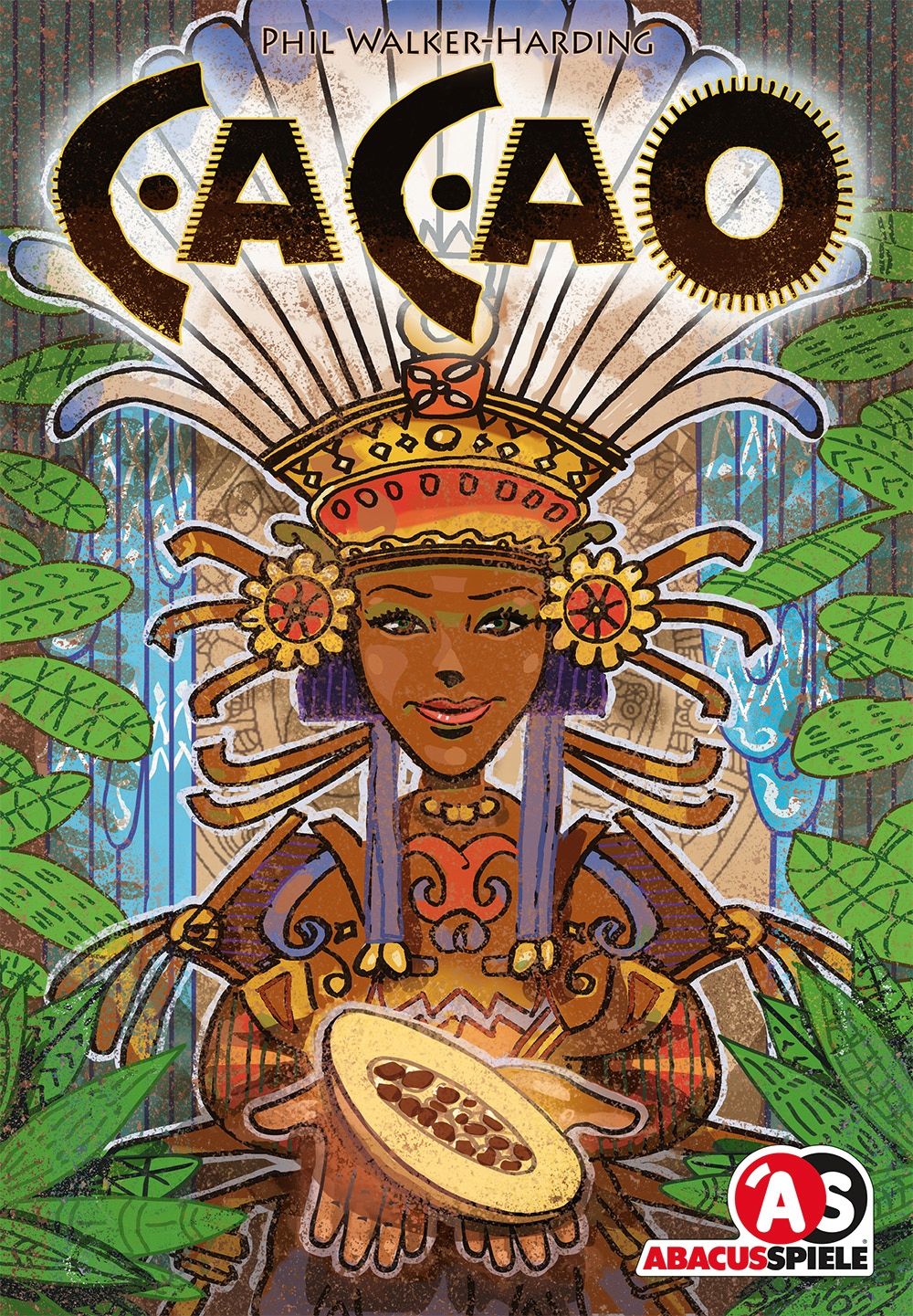
Cacao
ABACUSSPIELE · 2015
2–445 min8+ yrs1.8/5 complexity7.1 BGG#798 BGG15 KFamilyStrategy
⚡ short answer
How do you play Cacao?
As a tribal chief, your objective is to lead your people to prosperity and glory by cultivating and selling cacao. The player who accumulates the most gold by the end of the game wins. This is achieved through strategic placement of worker and jungle tiles to maximize resource production, trade, and temple control.
To find the best price for Cacao, howtoplay.ro compares deals from Romanian shops every day.
%2Fpic2379288.jpg)
the rules in 60 seconds▶ auto · 1/6
🧩
01
Setup
Each player gets a village board with a water carrier and worker tiles of their color, while two jungle tiles are placed diagonally in the center of the table.
The rules, step by step
Setup
Each player receives a village board, which in the digital adaptation is optimized and displayed in the player's status bar, along with worker tiles of their color. The water value is set to -10, and the status bar also shows the player's gold, cacao fruits, and sun tokens. Below this, three available worker tiles are displayed. Two open jungle tiles, typically green with location images, are placed face-up diagonally to each other in the center of the table, serving as the initial tiles. The number of worker and jungle tiles in the supply depends on the number of players.
Objective
As a tribal chief, your objective is to lead your people to prosperity and glory by cultivating and selling cacao. The player who accumulates the most gold by the end of the game wins. This is achieved through strategic placement of worker and jungle tiles to maximize resource production, trade, and temple control.
On your turn
The game proceeds in several rounds, with the first player chosen randomly (or clockwise in live play). On your turn, you place one worker tile from your hand next to one or more jungle tiles. Worker tiles cannot share a side with another worker tile, and jungle tiles cannot share a side with another jungle tile, creating a checkerboard pattern. If placing a worker tile creates an empty jungle space bordered by two or more worker tiles, that space must be filled with a jungle tile from the open supply. If multiple areas need filling, you choose which tile to place where. After placing the worker tile and filling any jungle spaces, you activate workers adjacent to the newly placed jungle tiles. Workers on plantations yield cacao fruits (one or two), markets allow selling cacao for gold (two to four gold per fruit), lakes allow refilling water up to a maximum of 16, and mines provide gold (one or two). Temples are scored at the end of the game. Each worker is activated only once per game. If you don't have sun tokens, you cannot overbuild a tile and must place workers as usual.
Scoring
At the end of the game, temple majorities are scored. The player with the most workers adjacent to a temple receives 6 gold, and the player with the second most receives 3 gold. In case of a tie for first place, the 6 gold is divided equally among all tied players, rounded down. There is no reward for a second-place tie. For each remaining sun token, you receive 1 gold from the bank. Your final gold total is adjusted by the value of the water source your water carrier is on (added or subtracted). Cacao fruits in your reserve do not yield gold. The player with the most gold wins. In case of a tie, the player with the most cacao fruits wins.
Game end
The game concludes after the round in which all players have placed their last worker tile. Temple majorities are then calculated one by one; to clarify, a scored temple is flipped to its reverse side. Players with the most workers adjacent to a temple receive gold, and those in second place also receive gold. Remaining sun tokens are converted to gold. The player with the highest total gold wins. In the event of a tie, the player with the most cacao fruits wins.
Tips
To find online game participants, it's recommended to join the Telegram channel and Discord server, with links provided in the video description. These platforms host daily gatherings for board games, and you can also post your own game announcements. Good luck in your games, subscribe to the channel, and hit the bell for notifications! All the best, and we'll hear from you soon!
game anatomy
Complexity1.8 / 5
BGG rating7.1 / 10
Vibe
FamilyStrategy
Language dependence
No in-game text needed
Play time
45 min
Players
2–4
Recommended age
8+ yrs
BGG rank
#798
from Trișache · verified
Frequently asked questions
Q1What is the goal of the game?
As a tribal chief, your objective is to lead your people to prosperity and glory by cultivating and selling cacao. The player who accumulates the most gold by the end of the game wins. This is achieved through strategic placement of worker and jungle tiles to maximize resource production, trade, and temple control.
Q2How do you set up the game?
Each player receives a village board, which in the digital adaptation is optimized and displayed in the player's status bar, along with worker tiles of their color. The water value is set to -10, and the status bar also shows the player's gold, cacao fruits, and sun tokens. Below this, three available worker tiles are displayed. Two open jungle tiles, typically green with location images, are placed face-up diagonally to each other in the center of the table, serving as the initial tiles. The number of worker and jungle tiles in the supply depends on the number of players.
Q3How does a turn work?
The game proceeds in several rounds, with the first player chosen randomly (or clockwise in live play). On your turn, you place one worker tile from your hand next to one or more jungle tiles. Worker tiles cannot share a side with another worker tile, and jungle tiles cannot share a side with another jungle tile, creating a checkerboard pattern. If placing a worker tile creates an empty jungle space bordered by two or more worker tiles, that space must be filled with a jungle tile from the open supply. If multiple areas need filling, you choose which tile to place where. After placing the worker tile and filling any jungle spaces, you activate workers adjacent to the newly placed jungle tiles. Workers on plantations yield cacao fruits (one or two), markets allow selling cacao for gold (two to four gold per fruit), lakes allow refilling water up to a maximum of 16, and mines provide gold (one or two). Temples are scored at the end of the game. Each worker is activated only once per game. If you don't have sun tokens, you cannot overbuild a tile and must place workers as usual.
Q4How is scoring calculated?
At the end of the game, temple majorities are scored. The player with the most workers adjacent to a temple receives 6 gold, and the player with the second most receives 3 gold. In case of a tie for first place, the 6 gold is divided equally among all tied players, rounded down. There is no reward for a second-place tie. For each remaining sun token, you receive 1 gold from the bank. Your final gold total is adjusted by the value of the water source your water carrier is on (added or subtracted). Cacao fruits in your reserve do not yield gold. The player with the most gold wins. In case of a tie, the player with the most cacao fruits wins.
Q5When and how does the game end?
The game concludes after the round in which all players have placed their last worker tile. Temple majorities are then calculated one by one; to clarify, a scored temple is flipped to its reverse side. Players with the most workers adjacent to a temple receive gold, and those in second place also receive gold. Remaining sun tokens are converted to gold. The player with the highest total gold wins. In the event of a tie, the player with the most cacao fruits wins.
Q6What tips are there for beginners?
To find online game participants, it's recommended to join the Telegram channel and Discord server, with links provided in the video description. These platforms host daily gatherings for board games, and you can also post your own game announcements. Good luck in your games, subscribe to the channel, and hit the bell for notifications! All the best, and we'll hear from you soon!
Q7How much does Cacao cost?
No store is currently tracking Cacao. Check the Prices tab — you can set a price alert to be notified when it appears.
Q8Where can I buy Cacao cheapest?
Check the Prices tab — howtoplay.ro aggregates offers from 7+ Romanian board-game stores and tracks price history.
Q9How do you play Cacao?
Cacao is a economic game, for 2–4 players, taking ~45 minutes, featuring area majority / influence. Check the Rules tab for setup, gameplay, and scoring, or ask Trișache anything about Cacao — our AI assistant built by howtoplay.ro and trained specifically on board game rulebooks.
Q10How many players does Cacao support?
Cacao is played by 2–4 players.
1 shop
All prices
1 shop · sorted by priceupdated today
Regatul JocurilorRomanian editioneasyboxCultural voucher
Cacao Editia in Limba Romana
○ out of stock
RON 89
Buy →out of stock
Regatul JocurilorDutch first editioneasyboxCultural voucher
Cacao (2015 English/German First Edition)
○ out of stock
RON 149
Buy →out of stock
Regatul JocurilorEnglish first editioneasyboxCultural voucher
Cacao (2015 English/German First Edition)
○ out of stock
RON 149
Buy →out of stock
affiliate links · prices include VAT · independent platform, no hidden sponsorships
Currently unavailable in all shops
Price history
See price by edition
Price trend over the last 90 days: minimum 71 lei, maximum 89 lei, now 89 lei.
Mechanics & categories