
%2Fpic96965.jpg)
Abusir: Die fünfte Dynastie
90m3–5p2005
%2Fpic1369792.jpg)
Upon the call of Pharaoh Snofru, up to four princes receive the order to build a glorious avenue in front of the red pyramid and to fill the grave chamber with precious and shining objects.
To find the best price for Dahschur: Die Rote Pyramide, howtoplay.ro compares deals from Romanian shops every day.
%2Fpic1369792.jpg)
Upon the call of Pharaoh Snofru, up to four princes receive the order to build a glorious avenue in front of the red pyramid and to fill the grave chamber with precious and shining objects.
Using their influence cards in Dahschur: Die Rote Pyramide, the player princes will buy gems for the construction of the avenue and try to position them for the filling of the grave chamber. They'll also use presents from the neighboring cities. The possibilities for each player, however, very much depends on the influence used by the other princess.
Receiving the most goodwill from the Pharaoh will require perfect utilization of the influence cards and the gathering of valuables for the grave chamber.
For the fulfilment of the Red Pyramid, Pharaoh Snofru orders the construction of an avenue and the filling of the grave chambers. In this complex strategy game, the players - acting as princes - use their limited influence to become the grand vizier. By clever usage of action cards and commodities, the players buy gems on the market, use them in the construction of the avenue, achieve beneficial positions for the filling of the grave chambers and use the tributes of the neighbouring settlements – all possibilities to score directly or at the end of the game. However, these tasks, asked by the pharaoh, cannot be solved alone! The dilemma: The player’s action potential depends on the cards chosen by the other players, which are pursuing their own goals...
To score at the end of the game, the players not only have to place their offerings in the procession, but will have to collect gold and silver as well in order to fill the grave chambers – preferably by hindering the other players from doing so. The player having collected the most recognition points will receive the title of the grand vizier in the end.
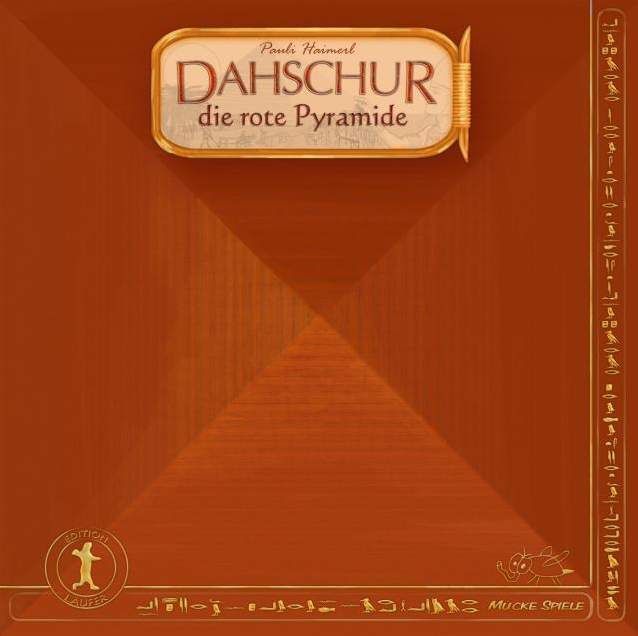
Special feature of the game: The game box is designed as a pyramid, revealing the burial chamber when opened.
Right now, none of the shops we track sells Dahschur: Die Rote Pyramide new.
%2Fpic4230427.jpg)
%2Fpic3711759.jpg)
%2Fpic7731082.jpg)
%2Fpic3955965.jpg)
%2Fpic4921450.jpg)