
Prices updated today
%2Fpic7068528.png)
Daybreak
CMYK · 2023
1–460–120 min10+ yrs2.9/5 complexity7.7 BGG#439 BGG11,8 KCo-opCouplesStrategy
⚡ short answer
How do you play Daybreak?
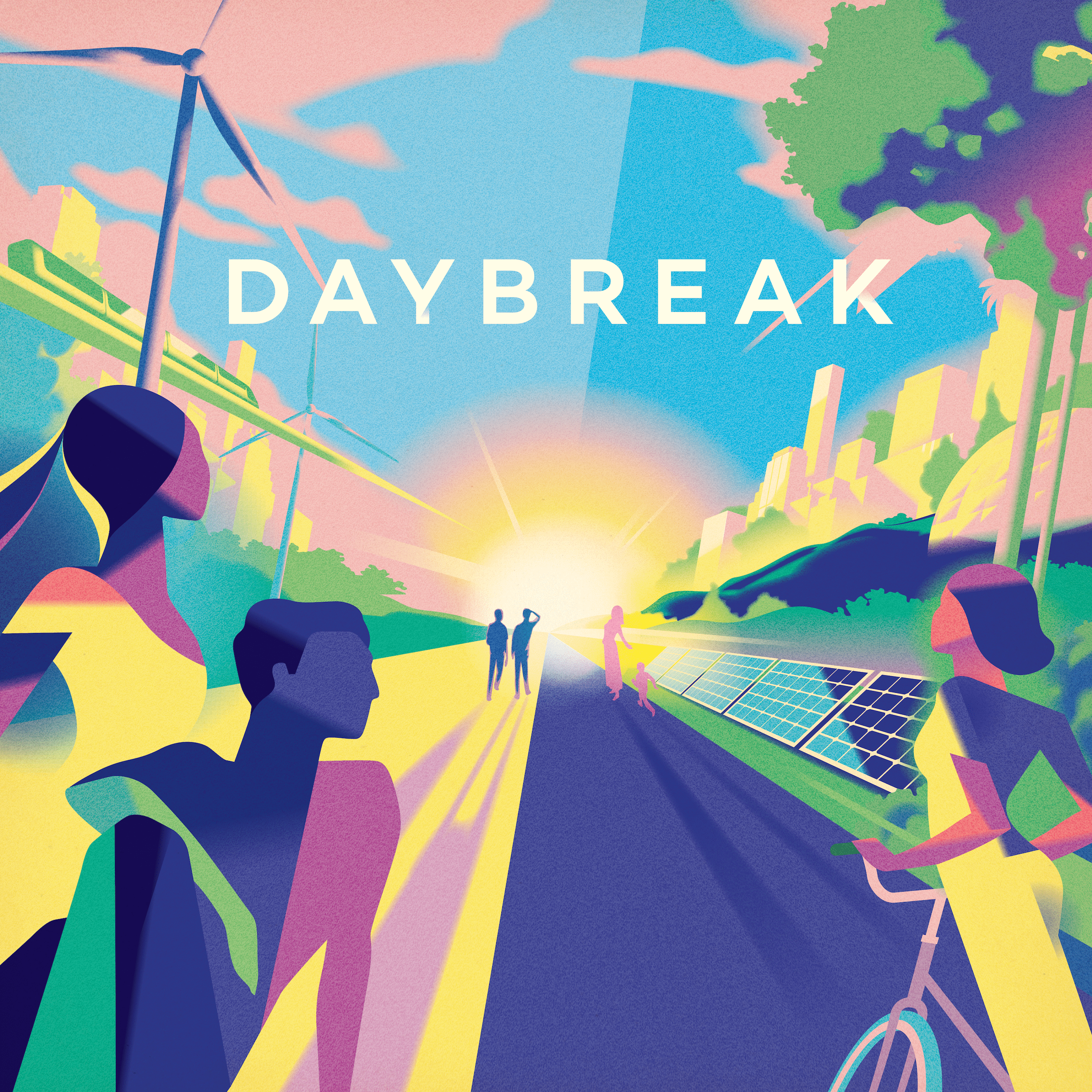
Daybreak is a cooperative board game where players act as world powers working together to halt climate change. The collective objective is to eliminate carbon emissions, prevent global temperatures from reaching catastrophic tipping points, build resilience to protect vulnerable communities, and successfully achieve draw down.
To find the best price for Daybreak, howtoplay.ro compares deals from Romanian shops every day.
FromRON 241· 3 shops
%2Fpic7068528.png)
the rules in 60 seconds▶ auto · 1/6
🧩
01
Setup
Players each take a world power board with five starting project cards, and the global board is prepared with crisis and project decks.
The rules, step by step
Setup
Setting up Daybreak involves assigning each player a distinct world power board accompanied by five initial local project cards in their play area. The central table features the main global board, tracking global temperature rise, emissions, weather systems, permafrost, and community crises. Card decks for local projects, global projects, and crises are shuffled and placed in their designated zones alongside dice, resilience tokens, tree tokens, and carbon cubes.
Objective
Daybreak is a cooperative board game where players act as world powers working together to halt climate change. The collective objective is to eliminate carbon emissions, prevent global temperatures from reaching catastrophic tipping points, build resilience to protect vulnerable communities, and successfully achieve draw down.
On your turn
A round of Daybreak progresses through structured stages: Global, Local, Emissions, Crisis, and Growth. In the Global stage, players reveal crisis cards and prepare global projects. During the Local stage, players draw five local project cards and take actions in any order—playing cards in front of stacks for new actions, behind stacks to boost existing projects, or discarding them to pay action costs. Next, the Emissions stage calculates demand and sequesters carbon. The Crisis stage resolves planetary effect dice and active crisis cards. Finally, the Growth stage checks victory conditions, advances the round marker, and increases energy demand.
Scoring
Scoring and victory in Daybreak are cooperative rather than competitive. Players measure progress by balancing energy demand with clean and dirty sources and tracking carbon cubes on the thermometer. Winning requires emptying the recent emissions area of all carbon cubes while maintaining active tree or ocean tokens.
Game end
The game concludes when win or loss conditions are met. Players win immediately upon achieving draw down—clearing emissions while maintaining open ocean or tree tokens and pulling carbon cubes off the thermometer. Conversely, the team loses if the thermometer fills completely and triggers unresolvable global crises.
Tips
To succeed, players must communicate constantly and execute effective cooperative strategies. Always use actions to help teammates who lack specific tags, share resilience tokens freely, tuck cards strategically under global projects and crises, and prioritize eliminating major carbon-emitting sources like dirty electricity and heavy industry early.
game anatomy
Complexity2.9 / 5
BGG rating7.7 / 10
Vibe
Co-opCouplesStrategy
Language dependence
Moderate text — a crib sheet helps
Play time
60–120 min
Players
1–4
Recommended age
10+ yrs
BGG rank
#439
from Trișache · verified
Frequently asked questions
Q1What is the goal of the game?
Daybreak is a cooperative board game where players act as world powers working together to halt climate change. The collective objective is to eliminate carbon emissions, prevent global temperatures from reaching catastrophic tipping points, build resilience to protect vulnerable communities, and successfully achieve draw down.
Q2How do you set up the game?
Setting up Daybreak involves assigning each player a distinct world power board accompanied by five initial local project cards in their play area. The central table features the main global board, tracking global temperature rise, emissions, weather systems, permafrost, and community crises. Card decks for local projects, global projects, and crises are shuffled and placed in their designated zones alongside dice, resilience tokens, tree tokens, and carbon cubes.
Q3How does a turn work?
A round of Daybreak progresses through structured stages: Global, Local, Emissions, Crisis, and Growth. In the Global stage, players reveal crisis cards and prepare global projects. During the Local stage, players draw five local project cards and take actions in any order—playing cards in front of stacks for new actions, behind stacks to boost existing projects, or discarding them to pay action costs. Next, the Emissions stage calculates demand and sequesters carbon. The Crisis stage resolves planetary effect dice and active crisis cards. Finally, the Growth stage checks victory conditions, advances the round marker, and increases energy demand.
Q4How is scoring calculated?
Scoring and victory in Daybreak are cooperative rather than competitive. Players measure progress by balancing energy demand with clean and dirty sources and tracking carbon cubes on the thermometer. Winning requires emptying the recent emissions area of all carbon cubes while maintaining active tree or ocean tokens.
Q5When and how does the game end?
The game concludes when win or loss conditions are met. Players win immediately upon achieving draw down—clearing emissions while maintaining open ocean or tree tokens and pulling carbon cubes off the thermometer. Conversely, the team loses if the thermometer fills completely and triggers unresolvable global crises.
Q6What tips are there for beginners?
To succeed, players must communicate constantly and execute effective cooperative strategies. Always use actions to help teammates who lack specific tags, share resilience tokens freely, tuck cards strategically under global projects and crises, and prioritize eliminating major carbon-emitting sources like dirty electricity and heavy industry early.
Q7How much does Daybreak cost?
Daybreak costs between 241 and 349 RON across Romanian stores.
Q8Where can I buy Daybreak cheapest?
The lowest price for Daybreak right now is 241 RON at ozone.ro. The Prices tab lists every store currently tracking it.
Q9How do you play Daybreak?
Daybreak is a card game game, for 1–4 players, taking ~60–120 minutes, featuring automatic resource growth. Check the Rules tab for setup, gameplay, and scoring, or ask Trișache anything about Daybreak — our AI assistant built by howtoplay.ro and trained specifically on board game rulebooks.
Q10How many players does Daybreak support?
Daybreak is played by 1–4 players.
3 shops
All prices
3 shops · sorted by priceupdated today
ozone.roCHEAPESTCHECKED 25 DAYS AGOaffiliateeasyboxFANbox
Joc de societate Daybreak - Strategic
free over RON 170
● in stock
RON 241
Regatul JocurilorEnglish editioneasyboxCultural voucher
Daybreak (English Edition)
free over RON 149
● in stock
RON 349
ozone.roCHECKED 76 DAYS AGOaffiliateeasyboxFANbox
Joc de societate Daybreak - Strategic
○ out of stock
RON 302
Buy →out of stock
affiliate links · prices include VAT · independent platform, no hidden sponsorships
🚚 Free shipping over RON 170
Price history
See price by edition
Price trend over the last 90 days: minimum 178 lei, maximum 349 lei, now 339 lei.
Mechanics & categories