Prices updated today
%2Fpic8195970.png)
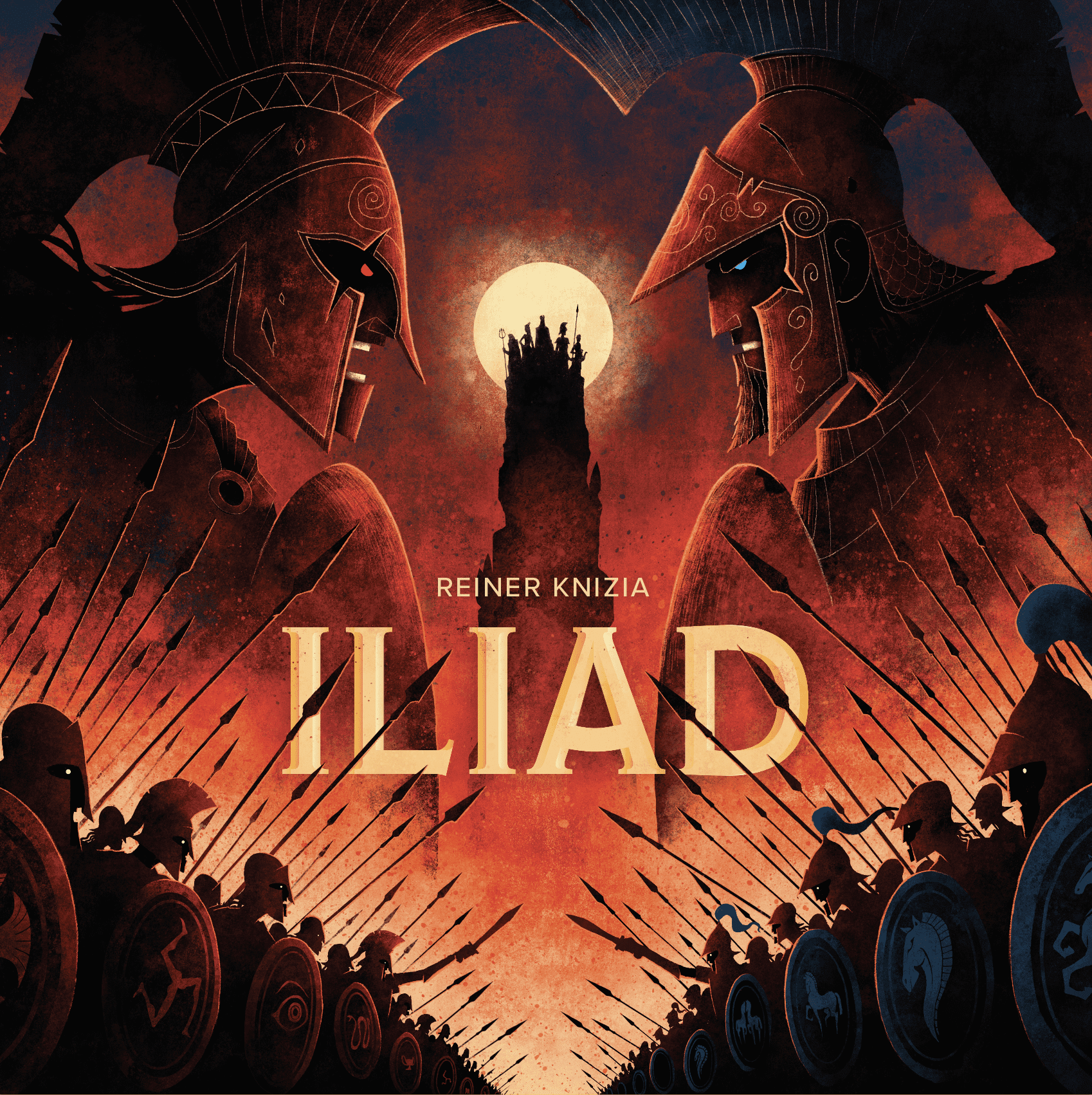
Iliad
Bitewing Games · 2025
230 min10+ yrs2.0/5 complexity7.7 BGG#1.908 BGG3,3 KCouplesStrategy
⚡ short answer
How do you play Iliad?
The main goal is to win the favors of five different gods represented by success tokens surrounding the board. A player can win by collecting all five god tokens or four different god tokens plus both wedding rings, provided they are the only player to do so.
To find the best price for Iliad, howtoplay.ro compares deals from Romanian shops every day.
FromRON 139· 4 shops
%2Fpic8195970.png)
the rules in 60 seconds▶ auto · 1/6
🧩
01
Setup
Players take Hector or Achilles, draw starting tiles, and randomly place initial tiles on the board.
The rules, step by step
Setup
In the game of Iliad, two players assume the roles of Hector and Achilles to recreate the Trojan War. Each player receives an identical set of numbered tiles ranging from one to five, plus special dolos tiles. At the start of the game, players draw two tiles as their starting hand, and four random tiles are placed in the center of the grid to form the starting board state.
Objective
The main goal is to win the favors of five different gods represented by success tokens surrounding the board. A player can win by collecting all five god tokens or four different god tokens plus both wedding rings, provided they are the only player to do so.
On your turn
On your turn, you must select one tile from your hand and place it onto the board adjacent to an existing tile and on a space matching your designated player color. Before ending your turn, you may optionally activate the special ability associated with the tile's value, such as relocating tiles or swapping tokens.
Scoring
Whenever a row or column is completely filled with tiles, it is immediately scored. Players sum the values of their tiles adjacent to the filled line. The player with the highest total wins the corresponding success token, with ties broken by the active player or specific tie-breaker rules.
Game end
Play continues in turns until all spaces on the board are filled with tiles and no more moves can be made. Final scoring determines the ultimate winner based on god tokens and tie-breaker values.
Tips
Strategic placement of low-value and high-value tiles is crucial. Use ability tiles wisely to manipulate opponent placements, manage accessible board spaces, and secure crucial god tokens before your opponent does.
game anatomy
Complexity2.0 / 5
BGG rating7.7 / 10
Vibe
CouplesStrategy
Language dependence
No in-game text needed
Play time
30 min
Players
2
Recommended age
10+ yrs
BGG rank
#1.908
from Trișache · verified
Frequently asked questions
Q1What is the goal of the game?
The main goal is to win the favors of five different gods represented by success tokens surrounding the board. A player can win by collecting all five god tokens or four different god tokens plus both wedding rings, provided they are the only player to do so.
Q2How do you set up the game?
In the game of Iliad, two players assume the roles of Hector and Achilles to recreate the Trojan War. Each player receives an identical set of numbered tiles ranging from one to five, plus special dolos tiles. At the start of the game, players draw two tiles as their starting hand, and four random tiles are placed in the center of the grid to form the starting board state.
Q3How does a turn work?
On your turn, you must select one tile from your hand and place it onto the board adjacent to an existing tile and on a space matching your designated player color. Before ending your turn, you may optionally activate the special ability associated with the tile's value, such as relocating tiles or swapping tokens.
Q4How is scoring calculated?
Whenever a row or column is completely filled with tiles, it is immediately scored. Players sum the values of their tiles adjacent to the filled line. The player with the highest total wins the corresponding success token, with ties broken by the active player or specific tie-breaker rules.
Q5When and how does the game end?
Play continues in turns until all spaces on the board are filled with tiles and no more moves can be made. Final scoring determines the ultimate winner based on god tokens and tie-breaker values.
Q6What tips are there for beginners?
Strategic placement of low-value and high-value tiles is crucial. Use ability tiles wisely to manipulate opponent placements, manage accessible board spaces, and secure crucial god tokens before your opponent does.
Q7How much does Iliad cost?
Iliad costs between 139 and 179 RON across Romanian stores.
Q8Where can I buy Iliad cheapest?
The lowest price for Iliad right now is 139 RON at Pionul.ro. The Prices tab lists every store currently tracking it.
Q9How do you play Iliad?
Iliad is a abstract strategy game, for 2 players, taking ~30 minutes, featuring area majority / influence. Check the Rules tab for setup, gameplay, and scoring, or ask Trișache anything about Iliad — our AI assistant built by howtoplay.ro and trained specifically on board game rulebooks.
Q10How many players does Iliad support?
Iliad is played by 2 players.
8 shops
All prices
8 shops · sorted by priceupdated today
Regatul JocurilorEnglish editioneasyboxCultural voucher
Iliad (English Edition)
○ out of stock
RON 139
Buy →out of stock
affiliate links · prices include VAT · independent platform, no hidden sponsorships
🚚 Free shipping over RON 250
Price history
See price by edition
Price trend over the last 90 days: minimum 107 lei, maximum 149 lei, now 149 lei.
Mechanics & categories