The primary objective depends entirely on the chosen role. The shark player aims to hunt down and devour the octopus four times or fill the shark's end-game track before time runs out. Conversely, the octopus player strives to survive by feeding four times, successfully evading the shark, or filling the octopus's end-game track. Both roles require entirely different strategic mindsets, blending hidden movement, deduction, and tactical resource management.
To find the best price for Kelp: Shark vs Octopus, howtoplay.ro compares deals from Romanian shops every day.
FromRON 359
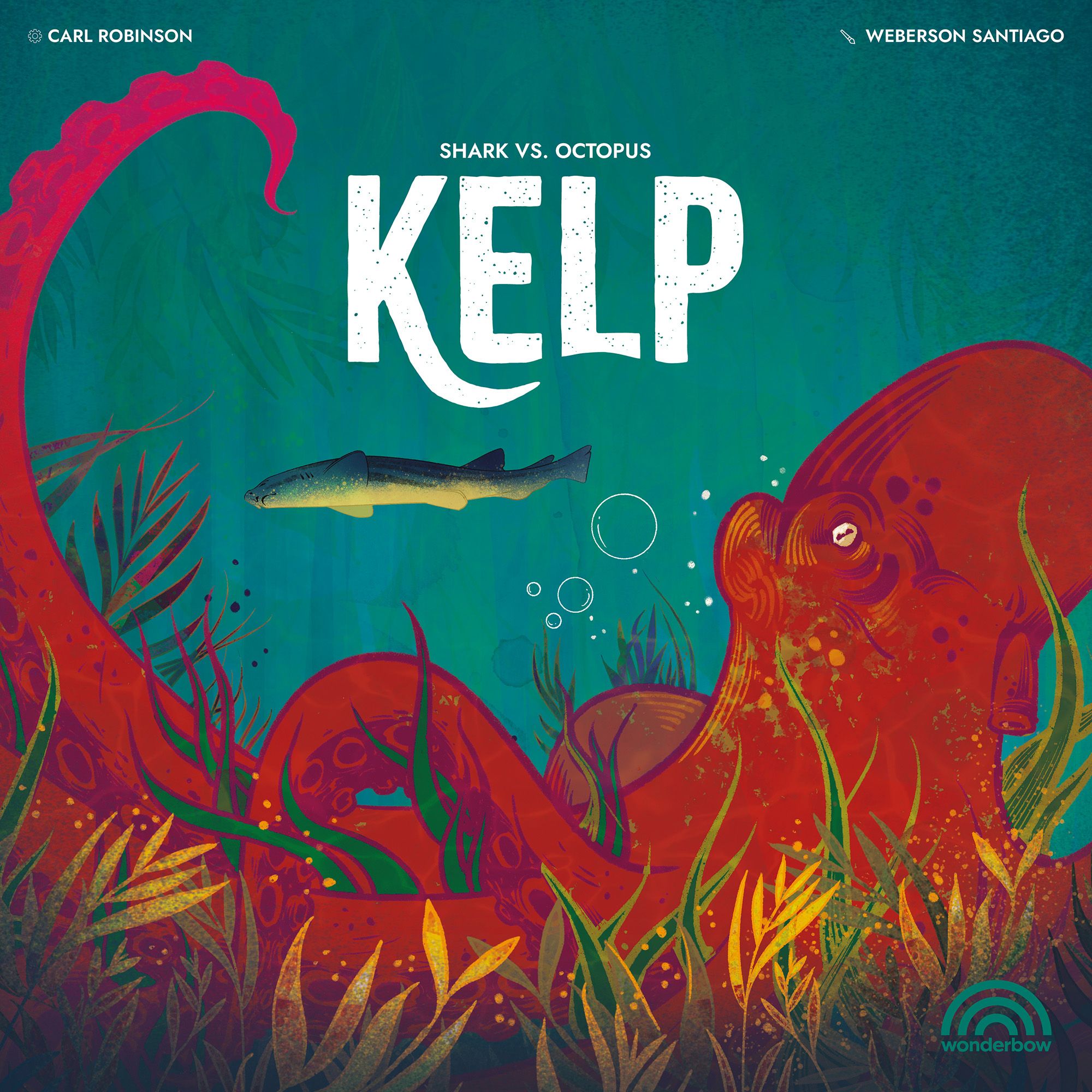
official art · Wonderbow Games
the rules in 60 seconds▶ auto · 1/6
🧩
01
Setup
Place the main board between the two players, with one taking the shark role and the other the octopus role, setting up their respective pieces, cards, tokens, and starting positions.
Setting up Kelp involves placing the central board between the two participants. One player assumes the role of the shark, while the other takes on the octopus. Each player receives their specific components, including action cards, tracking tokens, and special markers. The octopus player secretly places hidden tokens and marks their initial position on the board, while the shark player sets up their starting position and prepares their dice and purchasing tiles. All components are arranged neatly to ensure hidden information remains concealed throughout the setup phase.
Objective
The primary objective depends entirely on the chosen role. The shark player aims to hunt down and devour the octopus four times or fill the shark's end-game track before time runs out. Conversely, the octopus player strives to survive by feeding four times, successfully evading the shark, or filling the octopus's end-game track. Both roles require entirely different strategic mindsets, blending hidden movement, deduction, and tactical resource management.
On your turn
Turns follow a strict alternating sequence, always initiated by the octopus player. The octopus plays cards from their hand to move, reveal or swap terrain tiles, and manage hidden tokens or gain knowledge. Afterward, the shark player rolls dice to determine movement and actions, chasing the octopus, searching adjacent zones, or executing attacks based on dice values and strategic deductions. Each player must carefully balance their available actions to outmaneuver their opponent.
Scoring
Kelp does not utilize a traditional point-scoring system. Instead, success and progression are tracked directly on the board via feeding tracks and end-game markers. Successful attacks by the shark or successful feedings by the octopus advance their respective progression markers toward victory, while failed attempts or wasted actions fill the timer and end-game tracks.
Game end
The game concludes immediately under specific trigger conditions: either the shark successfully devours the octopus four times, the octopus completes four successful feedings, or either player completely fills their respective track before the other accomplishes their goal. The player who fulfills their win condition first is declared the winner of the asymmetrical duel.
Tips
To succeed as the octopus, you must master deception, misdirection, and clever tile swapping to keep the shark guessing your true location. As the shark, pay close attention to the octopus's movements, use your dice effectively for efficient scouting, and narrow down search zones methodically to trap your elusive prey.
🔬 game anatomy
Complexity2.4 / 5
BGG rating7.5 / 10
Vibe
Couples
Language dependence
Some text — easily memorized
🌐 plays without English
Play time
40–60 min
Players
2
Recommended age
10+ yrs
BGG rank
#1.054
✨ from Trișache · verified
Frequently asked questions
Q1What is the goal of the game?
The primary objective depends entirely on the chosen role. The shark player aims to hunt down and devour the octopus four times or fill the shark's end-game track before time runs out. Conversely, the octopus player strives to survive by feeding four times, successfully evading the shark, or filling the octopus's end-game track. Both roles require entirely different strategic mindsets, blending hidden movement, deduction, and tactical resource management.
Q2How do you set up the game?
Setting up Kelp involves placing the central board between the two participants. One player assumes the role of the shark, while the other takes on the octopus. Each player receives their specific components, including action cards, tracking tokens, and special markers. The octopus player secretly places hidden tokens and marks their initial position on the board, while the shark player sets up their starting position and prepares their dice and purchasing tiles. All components are arranged neatly to ensure hidden information remains concealed throughout the setup phase.
Q3How does a turn work?
Turns follow a strict alternating sequence, always initiated by the octopus player. The octopus plays cards from their hand to move, reveal or swap terrain tiles, and manage hidden tokens or gain knowledge. Afterward, the shark player rolls dice to determine movement and actions, chasing the octopus, searching adjacent zones, or executing attacks based on dice values and strategic deductions. Each player must carefully balance their available actions to outmaneuver their opponent.
Q4How is scoring calculated?
Kelp does not utilize a traditional point-scoring system. Instead, success and progression are tracked directly on the board via feeding tracks and end-game markers. Successful attacks by the shark or successful feedings by the octopus advance their respective progression markers toward victory, while failed attempts or wasted actions fill the timer and end-game tracks.
Q5When and how does the game end?
The game concludes immediately under specific trigger conditions: either the shark successfully devours the octopus four times, the octopus completes four successful feedings, or either player completely fills their respective track before the other accomplishes their goal. The player who fulfills their win condition first is declared the winner of the asymmetrical duel.
Q6What tips are there for beginners?
To succeed as the octopus, you must master deception, misdirection, and clever tile swapping to keep the shark guessing your true location. As the shark, pay close attention to the octopus's movements, use your dice effectively for efficient scouting, and narrow down search zones methodically to trap your elusive prey.
Q7How much does Kelp: Shark vs Octopus cost?
Kelp: Shark vs Octopus costs around 359 RON in Romania.
Q8Where can I buy Kelp: Shark vs Octopus cheapest?
The lowest price for Kelp: Shark vs Octopus right now is 359 RON at Regatul Jocurilor. The Prices tab lists every store currently tracking it.
Q9How do you play Kelp: Shark vs Octopus?
Kelp: Shark vs Octopus is a animals game, for 2 players, taking ~40–60 minutes, featuring area movement. Check the Rules tab for setup, gameplay, and scoring, or ask Trișache anything about Kelp: Shark vs Octopus — our AI assistant built by howtoplay.ro and trained specifically on board game rulebooks.
Q10How many players does Kelp: Shark vs Octopus support?
Kelp: Shark vs Octopus is played by 2 players.
💰 2 shops
All prices
2 shops · sorted by priceupdated today
Regatul JocurilorCHEAPESTKickstarter (EN)easyboxCultural voucher

%2Fpic7493386.jpg)
%2Fpic7493386.jpg)