The objective of Life of the Amazonia is to become the player who has cultivated the most prosperous jungle, measured by the total victory points accumulated from animals, terrain, vegetation, and various bonuses. Players achieve this by strategically expanding their jungle, populating it with diverse animals, and managing their resources effectively to meet specific scoring conditions and complete animal groups.
To find the best price for Life of the Amazonia, howtoplay.ro compares deals from Romanian shops every day.
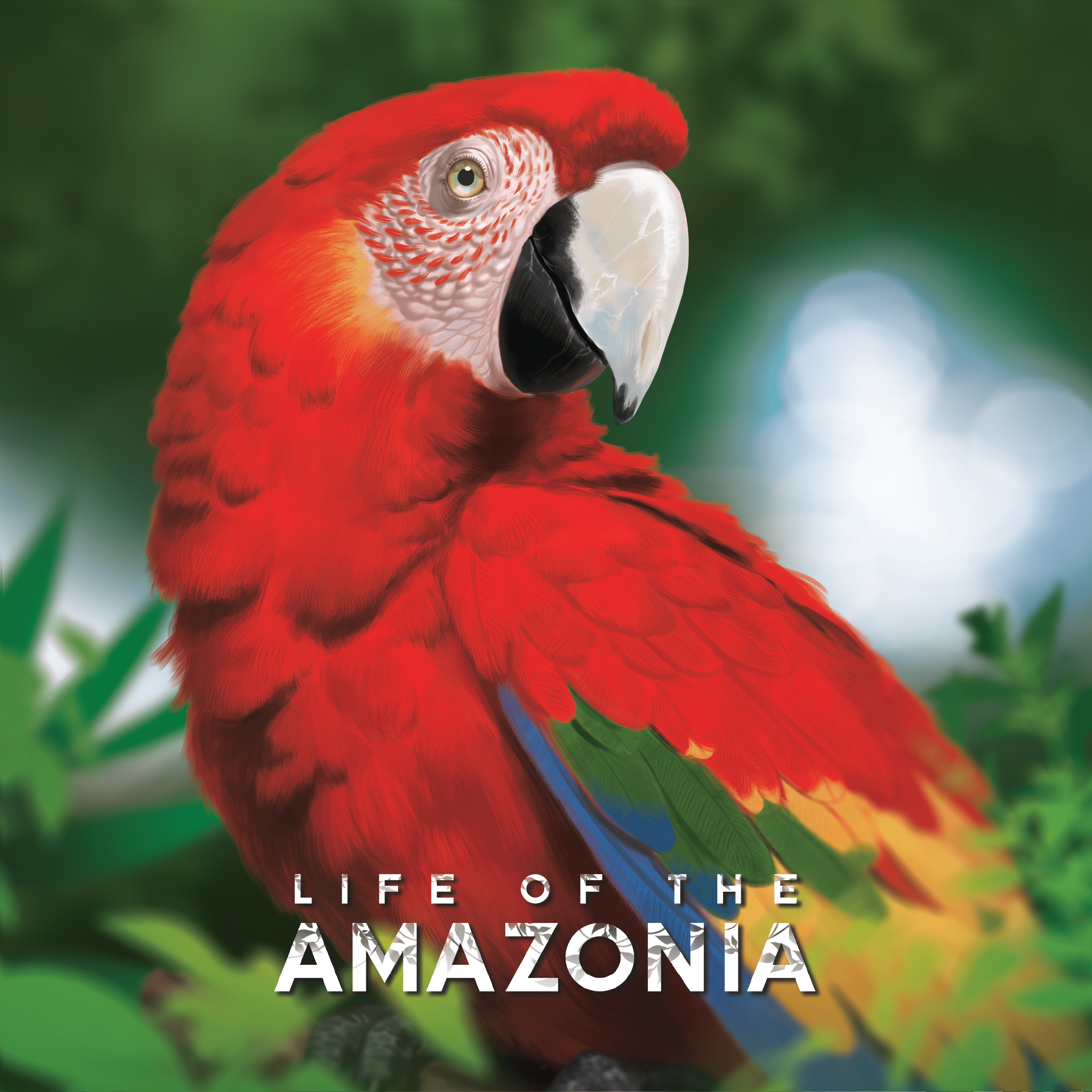
official art · Bad Comet
the rules in 60 seconds▶ auto · 1/6
🧩
01
Setup
Separate terrain tiles, shuffle and draw three face-up; place vegetation tokens, the waterfall board, and animal cards with their meeples; each player takes a starting terrain tile, a bag with initial resource tokens, a discard boat, and four player markers for the waterfall board; finally, shuffle and flip three insect and three scenery cards, and each player picks one unique animal card.
The rules, step by step
Setup
To set up, first separate the terrain tiles from the player starting tiles. Shuffle the terrain tiles and place them face-down in a pile, then flip the top three tiles face-up. Place the supplies of vegetation tokens (trees, aquatic flowers, and seeds) and special terrain tiles next to the terrain pile. Assemble and place the waterfall of life board on the table. Lay out the eight types of animal cards, ensuring the correct number of meeples for each animal is available based on the player count. Place the five 'complete' tokens and the end-game bonus token within easy reach. Shuffle the insect and scenery card decks separately, placing them face-down, then flip the top three cards of each deck face-up. Each player randomly takes one of the four starting terrain tiles and places it face-up in front of them. Players also take a bag in their chosen color, collecting three 1-currency tokens, two 2-currency tokens, two 1-leaf tokens, two 1-water tokens, and one 2-fruit token, placing them in their bag. The 3rd and 4th players also take one seed. Each player takes a discard boat and places it next to them. Finally, each player places their four player markers at the start of each track on the waterfall board, and draws two unique animal cards, choosing one to keep and discarding the other.
Objective
The objective of Life of the Amazonia is to become the player who has cultivated the most prosperous jungle, measured by the total victory points accumulated from animals, terrain, vegetation, and various bonuses. Players achieve this by strategically expanding their jungle, populating it with diverse animals, and managing their resources effectively to meet specific scoring conditions and complete animal groups.
On your turn
Each turn begins by drawing five resource tokens from your bag. You then perform actions using these tokens. Actions include buying better resource tokens from the token vaults (paying with currency tokens, with no change given), acquiring new terrain tiles from the face-up display (by moving your marker on the top waterfall track and paying leaf tokens), planting trees (by moving your marker on the middle waterfall track and paying leaf tokens to place trees on forest hexes), collecting aquatic flowers (by moving your marker on the bottom waterfall track and paying water tokens to place flowers on river hexes), expanding your storage capacity (by paying water tokens on the storage track), purchasing bonuses (like seeds, special terrain tiles, or composting tokens) from the waterfall board, composting unwanted tokens (removing them from your play area or boat), or placing animals in your jungle (by paying fruit tokens and sometimes water or leaves, and meeting specific terrain requirements). After performing all desired actions, check your storage capacity on the waterfall board to determine how many tokens you can keep for the next turn, returning any excess to your discard boat. Seeds are kept separately and do not count towards storage limits. Then, draw new tokens from your bag to reach your current storage limit, and the turn passes to the next player.
Scoring
At the end of the game, points are tallied from several sources. Each animal card has unique scoring conditions; for example, Woodpeckers score for unique pairs with trees, Tamarins score based on adjacent animals, and Macaws score based on trees in their habitat. Scenery cards provide end-game bonuses based on specific conditions met in your jungle. Points are also awarded for the progress made on the waterfall tracks, indicated by the white numbers on the spaces your markers have reached. Additionally, one point is scored for each seed you possess. Finally, the player who triggered the end of the game by completing the fifth animal group receives a 5-point end-game bonus token. The player with the highest total score wins. In case of a tie, the player who placed the most animals wins; if still tied, they share the victory.
Game end
The game continues in rounds until a player places the last 'complete' token on an animal card. This signifies that five of the eight animal groups have been fully populated. The player who triggers this condition collects the end-game bonus token and completes their current turn as usual, but skips the cleanup phase. All other players then take one final turn, one after the other, also skipping the cleanup phase. After everyone has completed their last turn, the game ends, and players proceed to final scoring.
Tips
To maximize your chances of winning, focus on playing to the strengths of your unique animal card and utilizing its special power effectively. Avoid accumulating too much currency, as this can weaken your engine by limiting your access to leaves, fruits, and water, which are crucial for other actions. It's highly beneficial to prepare your turn while other players are taking theirs; organizing your tokens and planning your moves in advance can significantly speed up gameplay and make it more enjoyable for everyone. Don't hesitate to compost low-value tokens early and often to maintain a strong play area. Expanding your storage capacity early in the game is also a strong strategy, as having an extra token or two can be instrumental in affording higher-value resource tokens (like value 3 or 4) and executing more powerful actions.
🔬 game anatomy
Complexity2.9 / 5
BGG rating8.1 / 10
Vibe
Couples
Language dependence
Moderate text — a crib sheet helps
Play time
60–150 min
Players
1–4
Recommended age
14+ yrs
BGG rank
#459
✨ from Trișache · verified
Frequently asked questions
Q1What is the goal of the game?
The objective of Life of the Amazonia is to become the player who has cultivated the most prosperous jungle, measured by the total victory points accumulated from animals, terrain, vegetation, and various bonuses. Players achieve this by strategically expanding their jungle, populating it with diverse animals, and managing their resources effectively to meet specific scoring conditions and complete animal groups.
Q2How do you set up the game?
To set up, first separate the terrain tiles from the player starting tiles. Shuffle the terrain tiles and place them face-down in a pile, then flip the top three tiles face-up. Place the supplies of vegetation tokens (trees, aquatic flowers, and seeds) and special terrain tiles next to the terrain pile. Assemble and place the waterfall of life board on the table. Lay out the eight types of animal cards, ensuring the correct number of meeples for each animal is available based on the player count. Place the five 'complete' tokens and the end-game bonus token within easy reach. Shuffle the insect and scenery card decks separately, placing them face-down, then flip the top three cards of each deck face-up. Each player randomly takes one of the four starting terrain tiles and places it face-up in front of them. Players also take a bag in their chosen color, collecting three 1-currency tokens, two 2-currency tokens, two 1-leaf tokens, two 1-water tokens, and one 2-fruit token, placing them in their bag. The 3rd and 4th players also take one seed. Each player takes a discard boat and places it next to them. Finally, each player places their four player markers at the start of each track on the waterfall board, and draws two unique animal cards, choosing one to keep and discarding the other.
Q3How does a turn work?
Each turn begins by drawing five resource tokens from your bag. You then perform actions using these tokens. Actions include buying better resource tokens from the token vaults (paying with currency tokens, with no change given), acquiring new terrain tiles from the face-up display (by moving your marker on the top waterfall track and paying leaf tokens), planting trees (by moving your marker on the middle waterfall track and paying leaf tokens to place trees on forest hexes), collecting aquatic flowers (by moving your marker on the bottom waterfall track and paying water tokens to place flowers on river hexes), expanding your storage capacity (by paying water tokens on the storage track), purchasing bonuses (like seeds, special terrain tiles, or composting tokens) from the waterfall board, composting unwanted tokens (removing them from your play area or boat), or placing animals in your jungle (by paying fruit tokens and sometimes water or leaves, and meeting specific terrain requirements). After performing all desired actions, check your storage capacity on the waterfall board to determine how many tokens you can keep for the next turn, returning any excess to your discard boat. Seeds are kept separately and do not count towards storage limits. Then, draw new tokens from your bag to reach your current storage limit, and the turn passes to the next player.
Q4How is scoring calculated?
At the end of the game, points are tallied from several sources. Each animal card has unique scoring conditions; for example, Woodpeckers score for unique pairs with trees, Tamarins score based on adjacent animals, and Macaws score based on trees in their habitat. Scenery cards provide end-game bonuses based on specific conditions met in your jungle. Points are also awarded for the progress made on the waterfall tracks, indicated by the white numbers on the spaces your markers have reached. Additionally, one point is scored for each seed you possess. Finally, the player who triggered the end of the game by completing the fifth animal group receives a 5-point end-game bonus token. The player with the highest total score wins. In case of a tie, the player who placed the most animals wins; if still tied, they share the victory.
Q5When and how does the game end?
The game continues in rounds until a player places the last 'complete' token on an animal card. This signifies that five of the eight animal groups have been fully populated. The player who triggers this condition collects the end-game bonus token and completes their current turn as usual, but skips the cleanup phase. All other players then take one final turn, one after the other, also skipping the cleanup phase. After everyone has completed their last turn, the game ends, and players proceed to final scoring.
Q6What tips are there for beginners?
To maximize your chances of winning, focus on playing to the strengths of your unique animal card and utilizing its special power effectively. Avoid accumulating too much currency, as this can weaken your engine by limiting your access to leaves, fruits, and water, which are crucial for other actions. It's highly beneficial to prepare your turn while other players are taking theirs; organizing your tokens and planning your moves in advance can significantly speed up gameplay and make it more enjoyable for everyone. Don't hesitate to compost low-value tokens early and often to maintain a strong play area. Expanding your storage capacity early in the game is also a strong strategy, as having an extra token or two can be instrumental in affording higher-value resource tokens (like value 3 or 4) and executing more powerful actions.
Q7How much does Life of the Amazonia cost?
No store is currently tracking Life of the Amazonia. Check the Prices tab — you can set a price alert to be notified when it appears.
Q8Where can I buy Life of the Amazonia cheapest?
Check the Prices tab — howtoplay.ro aggregates offers from 7+ Romanian board-game stores and tracks price history.
Q9How do you play Life of the Amazonia?
Life of the Amazonia is a animals game, for 1–4 players, taking ~60–150 minutes, featuring deck, bag, and pool building. Check the Rules tab for setup, gameplay, and scoring, or ask Trișache anything about Life of the Amazonia — our AI assistant built by howtoplay.ro and trained specifically on board game rulebooks.
Q10How many players does Life of the Amazonia support?

%2Fpic7002853.png)
%2Fpic7002853.png)