
howtoplay.ro
Marvel Zombies: A Zombicide Game

Marvel Zombies: A Zombicide Game

CMON Global Limited · 2023
1–660 min14+ yrs2.4/5 complexity7.9 BGG#875 BGG8,9 KCo-opCouples
short answer

How do you play Marvel Zombies: A Zombicide Game?

The main objective of this tutorial is to achieve a dark gray Non-Metallic Metal (NMM) effect on the armor panels, a reddish-brown color for the suit, and specific blue and gold details on the goggles, shoulder stripes, and chest emblem. The goal is to create a worn, textured look for the armor.

To find the best price for Marvel Zombies: A Zombicide Game, howtoplay.ro compares deals from Romanian shops every day.
FromRON 749
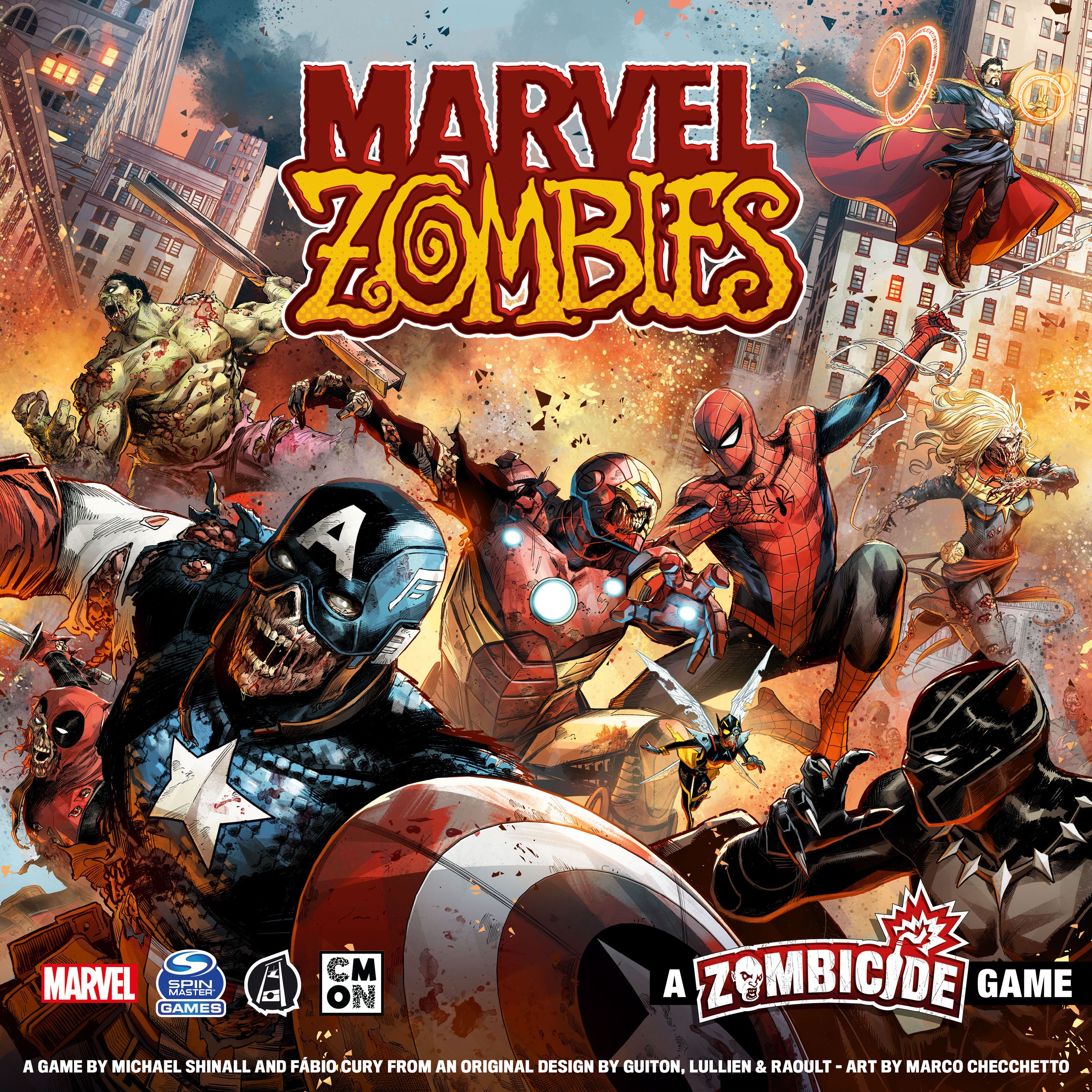
Marvel Zombies: A Zombicide Game box art
official art · CMON Global Limited
the rules in 60 seconds▶ auto · 1/6
🧩
01

Setup

The video shows how to paint the armor of the Shield Agents from Marvel Zombies: A Zombicide Game.

The rules, step by step

Setup
The video demonstrates the painting process for the Shield Agents from Marvel Zombies: A Zombicide Game. The miniature should be primed black before starting. The initial steps focus on establishing the base colors and initial highlights for the armor and the suit worn underneath.
Objective
The main objective of this tutorial is to achieve a dark gray Non-Metallic Metal (NMM) effect on the armor panels, a reddish-brown color for the suit, and specific blue and gold details on the goggles, shoulder stripes, and chest emblem. The goal is to create a worn, textured look for the armor.
On your turn
Begin by applying Dark Sea Blue to approximately 70% of the armor panels, leaving crevices black. Blend the transition between black and Dark Sea Blue using glazes (diluted paint). Next, mix Medium Sea Gray with Dark Sea Blue and sketch highlight areas, leaving certain panels black for later. Apply pure Medium Sea Gray for further highlights and edge highlights, using a thicker consistency for edges. For the suit, apply Rhinox Hide as a base layer, then highlight folds with Burnt Red. Return to the previously black armor panels and goggles, painting them with Dark Sea Blue. Mix Lothern Blue with Dark Sea Blue to highlight these panels and goggles, creating gradients on flat surfaces. Use pure Lothern Blue for final edge highlights and diagonal lines on the front panels. For the chest emblem, use Ochre Brown, followed by Yellow Ochre and Ice Yellow, applied with a thick consistency and overbrushing technique to achieve a simple gold NMM effect.
Scoring
This video is a painting tutorial for miniatures and does not involve game rules or scoring. The 'scoring' aspect is replaced by the successful application of painting techniques to achieve the desired aesthetic outcome for the miniature.
Game end
The painting process is complete once all the armor panels, the suit, goggles, and the chest emblem have been painted and highlighted as demonstrated. The final result should be a detailed Shield Agent miniature with a dark gray NMM armor, a reddish-brown suit, and distinct blue and gold accents.
Tips
When blending Dark Sea Blue with black, use thin glazes to ensure a smooth transition, applying one or two layers at most. For the Medium Sea Gray highlights, use thin layers to build opacity, and for edge highlights, use a slightly thicker paint consistency and the side of your brush to achieve crisp lines. When painting the blue panels and goggles, ensure diagonal lines on the goggles are placed differently to avoid an unnatural appearance. For the gold emblem, apply Ochre Brown, Yellow Ochre, and Ice Yellow with a thick consistency and overbrushing to prevent the paint from flowing into recesses, ensuring a clean and simple gold NMM effect.
🔬 game anatomy
Complexity2.4 / 5
BGG rating7.9 / 10
Vibe
Co-opCouples
Language dependence
Moderate text — a crib sheet helps
Play time
60 min
Players
1–6
Recommended age
14+ yrs
BGG rank
#875

from Trișache · verified

Frequently asked questions

Q1What is the goal of the game?
The main objective of this tutorial is to achieve a dark gray Non-Metallic Metal (NMM) effect on the armor panels, a reddish-brown color for the suit, and specific blue and gold details on the goggles, shoulder stripes, and chest emblem. The goal is to create a worn, textured look for the armor.
Q2How do you set up the game?
The video demonstrates the painting process for the Shield Agents from Marvel Zombies: A Zombicide Game. The miniature should be primed black before starting. The initial steps focus on establishing the base colors and initial highlights for the armor and the suit worn underneath.
Q3How does a turn work?
Begin by applying Dark Sea Blue to approximately 70% of the armor panels, leaving crevices black. Blend the transition between black and Dark Sea Blue using glazes (diluted paint). Next, mix Medium Sea Gray with Dark Sea Blue and sketch highlight areas, leaving certain panels black for later. Apply pure Medium Sea Gray for further highlights and edge highlights, using a thicker consistency for edges. For the suit, apply Rhinox Hide as a base layer, then highlight folds with Burnt Red. Return to the previously black armor panels and goggles, painting them with Dark Sea Blue. Mix Lothern Blue with Dark Sea Blue to highlight these panels and goggles, creating gradients on flat surfaces. Use pure Lothern Blue for final edge highlights and diagonal lines on the front panels. For the chest emblem, use Ochre Brown, followed by Yellow Ochre and Ice Yellow, applied with a thick consistency and overbrushing technique to achieve a simple gold NMM effect.
Q4How is scoring calculated?
This video is a painting tutorial for miniatures and does not involve game rules or scoring. The 'scoring' aspect is replaced by the successful application of painting techniques to achieve the desired aesthetic outcome for the miniature.
Q5When and how does the game end?
The painting process is complete once all the armor panels, the suit, goggles, and the chest emblem have been painted and highlighted as demonstrated. The final result should be a detailed Shield Agent miniature with a dark gray NMM armor, a reddish-brown suit, and distinct blue and gold accents.
Q6What tips are there for beginners?
When blending Dark Sea Blue with black, use thin glazes to ensure a smooth transition, applying one or two layers at most. For the Medium Sea Gray highlights, use thin layers to build opacity, and for edge highlights, use a slightly thicker paint consistency and the side of your brush to achieve crisp lines. When painting the blue panels and goggles, ensure diagonal lines on the goggles are placed differently to avoid an unnatural appearance. For the gold emblem, apply Ochre Brown, Yellow Ochre, and Ice Yellow with a thick consistency and overbrushing to prevent the paint from flowing into recesses, ensuring a clean and simple gold NMM effect.
Q7How much does Marvel Zombies: A Zombicide Game cost?
Marvel Zombies: A Zombicide Game costs around 749 RON in Romania.
Q8Where can I buy Marvel Zombies: A Zombicide Game cheapest?
The lowest price for Marvel Zombies: A Zombicide Game right now is 749 RON at Regatul Jocurilor. The Prices tab lists every store currently tracking it.
Q9How do you play Marvel Zombies: A Zombicide Game?
Marvel Zombies: A Zombicide Game is a comic book / strip game, for 1–6 players, taking ~60 minutes, featuring action points. Check the Rules tab for setup, gameplay, and scoring, or ask Trișache anything about Marvel Zombies: A Zombicide Game — our AI assistant built by howtoplay.ro and trained specifically on board game rulebooks.
Q10How many players does Marvel Zombies: A Zombicide Game support?
Marvel Zombies: A Zombicide Game is played by 1–6 players.

💰 1 shop

All prices

1 shop · sorted by price
Regatul JocurilorCHEAPESTStandard (EN)
Marvel Zombies: A Zombicide Game (Standard English Edition)
free over RON 149
RON 749
Buy
Regatul JocurilorKickstarter
Marvel Zombies: A Zombicide Game (Kickstarter Resistance Pledge)
free over RON 149
RON 1,899
Buy
affiliate links · prices include VAT · independent platform, no hidden sponsorships
🚚 Free shipping over RON 149
Mechanics & categories

Expansions

Accessories

Games with similar mechanics

How we compute this