
Prices updated today
%2Fpic5259037.jpg)
Motyla noga!
MDR · 2018
2–810–15 min6+ yrs1.0/5 complexity6.8 BGG15KidsParty
⚡ short answer
How do you play Motyla noga!?
The main objective of the game is to be the quickest player to correctly identify the final item where the butterfly lands after tracing its path across a series of cards. By doing so, you win the round and collect all the cards that were revealed during that round.
To find the best price for Motyla noga!, howtoplay.ro compares deals from Romanian shops every day.
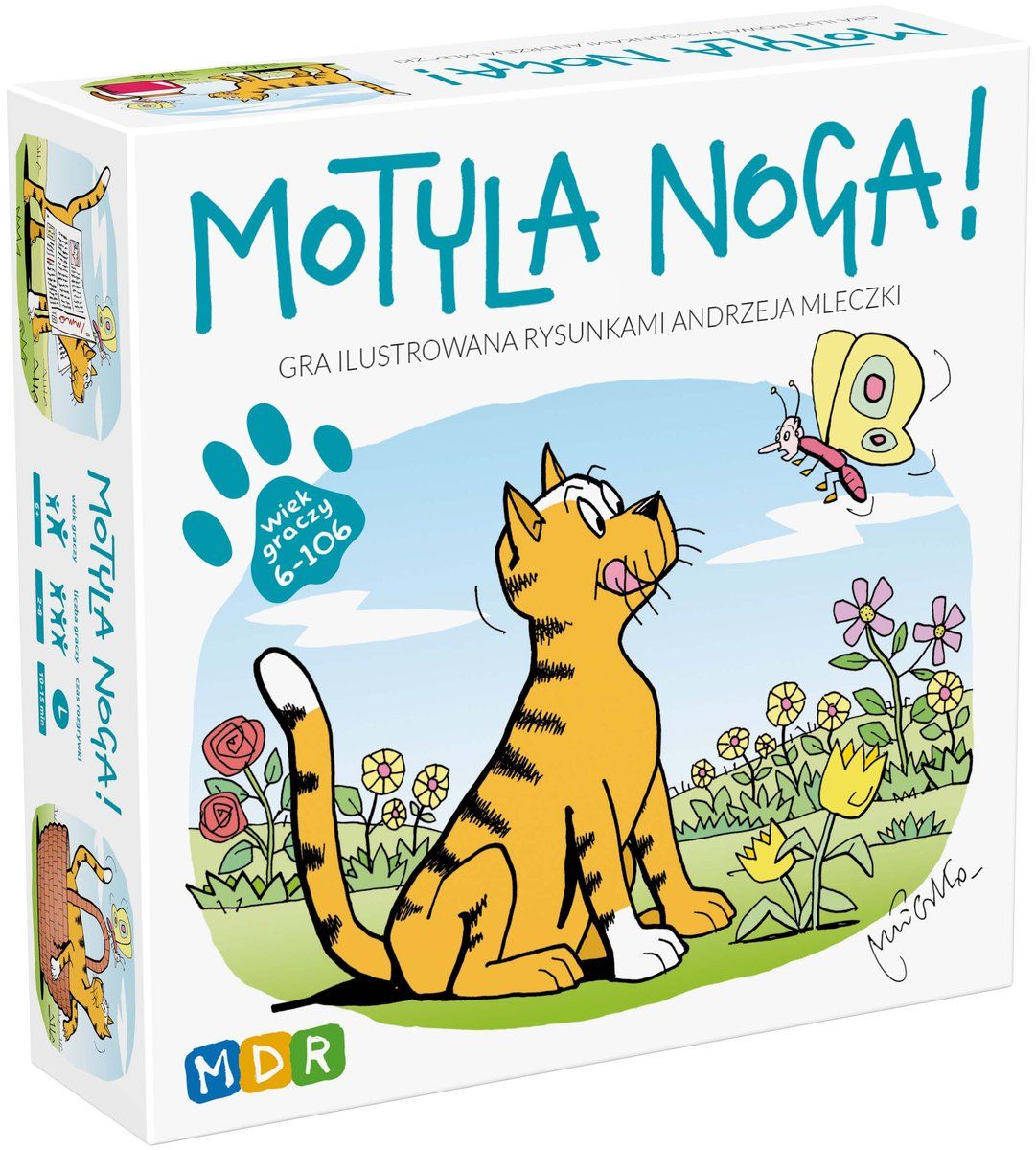%2Fpic5259037.jpg)
the rules in 60 seconds▶ auto · 1/6
🧩
01
Setup
Shuffle the deck of cards and place it face down in the center of the table, then draw the top card and place it face up next to the deck.
The rules, step by step
Setup
To set up the game, first shuffle the entire deck of cards thoroughly. Place the shuffled deck face down in the center of the playing area. Then, draw the top card from the deck and place it face up next to the deck. This face-up card will show the starting item for the butterfly's path.
Objective
The main objective of the game is to be the quickest player to correctly identify the final item where the butterfly lands after tracing its path across a series of cards. By doing so, you win the round and collect all the cards that were revealed during that round.
On your turn
Players do not take turns in the traditional sense; instead, all players play simultaneously. Starting with the item depicted on the top card of the face-down deck, players must visually trace the butterfly's path across the revealed cards. The path continues from one item to another, following the connecting lines on each card, until an item is reached that has no further connecting line. This last item is the butterfly's final landing spot for that round.
Scoring
For each round won, the player who correctly identifies the butterfly's final landing spot collects all the cards that were revealed during that round. Each collected card is worth one victory point, contributing to their total score at the end of the game.
Game end
The game concludes when the main deck of cards is completely exhausted, meaning there are no more cards left to draw. At this point, all players count the total number of cards they have collected throughout the game. The player who has accumulated the highest number of cards is declared the winner of the game.
Tips
To excel at 'Fluturele si Pisica', it's crucial to develop sharp visual tracking skills. Practice quickly identifying the starting item on the deck's top card and then swiftly following the intricate lines and connections between items on subsequent cards. The key is to maintain focus and accurately determine the endpoint of the butterfly's journey before your opponents.
game anatomy
Complexity1.0 / 5
BGG rating6.8 / 10
Vibe
KidsParty
Play time
10–15 min
Players
2–8
Recommended age
6+ yrs
from Trișache · verified
Frequently asked questions
Q1What is the goal of the game?
The main objective of the game is to be the quickest player to correctly identify the final item where the butterfly lands after tracing its path across a series of cards. By doing so, you win the round and collect all the cards that were revealed during that round.
Q2How do you set up the game?
To set up the game, first shuffle the entire deck of cards thoroughly. Place the shuffled deck face down in the center of the playing area. Then, draw the top card from the deck and place it face up next to the deck. This face-up card will show the starting item for the butterfly's path.
Q3How does a turn work?
Players do not take turns in the traditional sense; instead, all players play simultaneously. Starting with the item depicted on the top card of the face-down deck, players must visually trace the butterfly's path across the revealed cards. The path continues from one item to another, following the connecting lines on each card, until an item is reached that has no further connecting line. This last item is the butterfly's final landing spot for that round.
Q4How is scoring calculated?
For each round won, the player who correctly identifies the butterfly's final landing spot collects all the cards that were revealed during that round. Each collected card is worth one victory point, contributing to their total score at the end of the game.
Q5When and how does the game end?
The game concludes when the main deck of cards is completely exhausted, meaning there are no more cards left to draw. At this point, all players count the total number of cards they have collected throughout the game. The player who has accumulated the highest number of cards is declared the winner of the game.
Q6What tips are there for beginners?
To excel at 'Fluturele si Pisica', it's crucial to develop sharp visual tracking skills. Practice quickly identifying the starting item on the deck's top card and then swiftly following the intricate lines and connections between items on subsequent cards. The key is to maintain focus and accurately determine the endpoint of the butterfly's journey before your opponents.
Q7How much does Motyla noga! cost?
No store is currently tracking Motyla noga!. Check the Prices tab — you can set a price alert to be notified when it appears.
Q8Where can I buy Motyla noga! cheapest?
Check the Prices tab — howtoplay.ro aggregates offers from 7+ Romanian board-game stores and tracks price history.
Q9How do you play Motyla noga!?
Motyla noga! is a animals game, for 2–8 players, taking ~10–15 minutes. Check the Rules tab for setup, gameplay, and scoring, or ask Trișache anything about Motyla noga! — our AI assistant built by howtoplay.ro and trained specifically on board game rulebooks.
Q10How many players does Motyla noga! support?
Motyla noga! is played by 2–8 players.
2 shops
All prices
2 shops · sorted by priceupdated today
affiliate links · prices include VAT · independent platform, no hidden sponsorships
Currently unavailable in all shops
Price history
Price trend over the last 90 days: minimum 31 lei, maximum 39 lei, now 39 lei.
Mechanics & categories