Prices updated today
%2Fpic7070194.jpg)
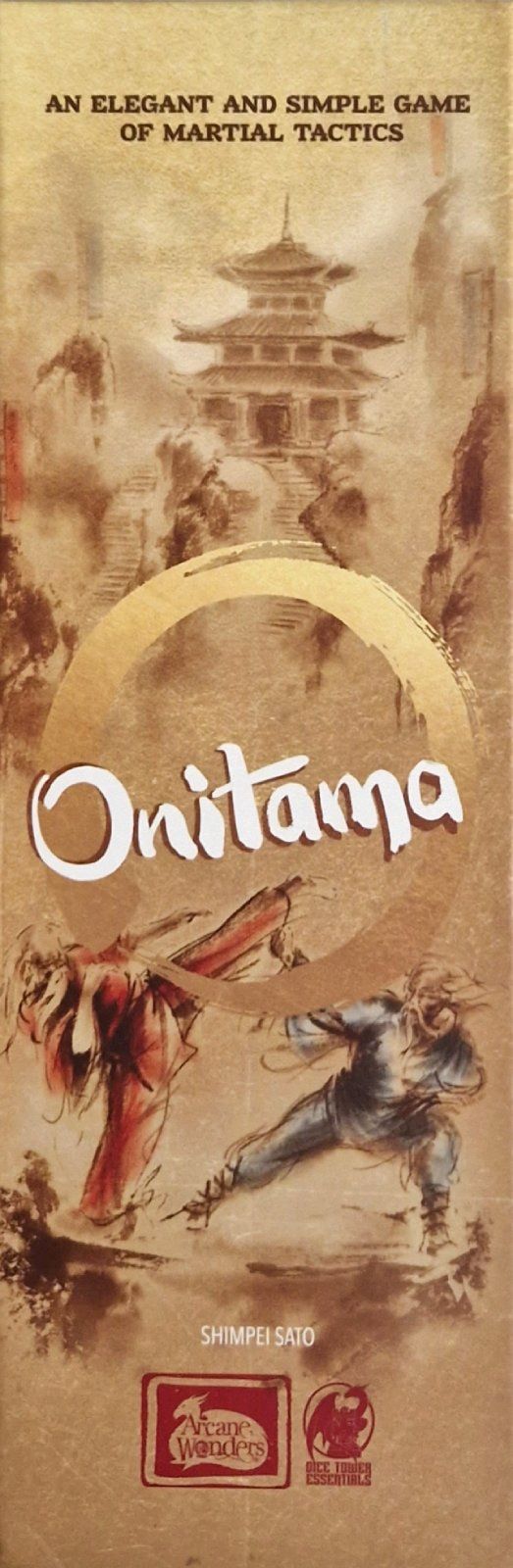
Onitama
Arcane Wonders · 2014
215–20 min10+ yrs1.7/5 complexity7.3 BGG#367 BGG39,9 KCouplesStrategy
⚡ short answer
How do you play Onitama?
The objective of Onitama is to either capture your opponent's Sensei piece or move your own Sensei piece to your opponent's starting Sensei space, known as the Temple Arch. The first player to achieve either of these conditions wins the game.
To find the best price for Onitama, howtoplay.ro compares deals from Romanian shops every day.
FromRON 179· 2 shops
%2Fpic7070194.jpg)
the rules in 60 seconds▶ auto · 1/6
🧩
01
Setup
Each player starts with five pieces, including one Sensei, on their side of the 5x5 board.
The rules, step by step
Setup
Onitama is played on a 5x5 grid. Each player starts with five pieces: four students and one Sensei. The Sensei is placed in the middle of the back row, and the students are placed on either side of the Sensei. Five movement cards are drawn at random from a deck of 16 unique cards. Two cards are dealt to each player, and one card is placed face-up in the middle, next to the board.
Objective
The objective of Onitama is to either capture your opponent's Sensei piece or move your own Sensei piece to your opponent's starting Sensei space, known as the Temple Arch. The first player to achieve either of these conditions wins the game.
On your turn
On your turn, you must choose one of the two movement cards in your hand. You then select one of your pieces on the board and move it according to the pattern shown on the chosen card. After moving, you place the used movement card in the middle, replacing the card that was there. You then take the card that was previously in the middle into your hand, giving you two new movement options for your next turn. This unique card exchange mechanism means that every move you make also dictates a future move your opponent can make.
Scoring
Onitama is a game of direct confrontation with a clear win condition. There are no points or scores accumulated during the game. The game concludes immediately once one player successfully meets either of the two victory conditions.
Game end
The game concludes when one player successfully captures the opponent's Sensei piece, or when a player moves their own Sensei piece onto the opponent's Temple Arch space (the starting position of the opponent's Sensei). The player who achieves either of these conditions is declared the winner.
Tips
Success in Onitama relies heavily on strategic planning and anticipating your opponent's moves. Since movement cards are exchanged, you must consider not only the immediate benefit of your move but also how the card you pass to your opponent might be used against you. Look several turns ahead, analyze the available cards, and try to predict your opponent's options to gain an advantage.
game anatomy
Complexity1.7 / 5
BGG rating7.3 / 10
Vibe
CouplesStrategy
Language dependence
No in-game text needed
Play time
15–20 min
Players
2
Recommended age
10+ yrs
BGG rank
#367
from Trișache · verified
Frequently asked questions
Q1What is the goal of the game?
The objective of Onitama is to either capture your opponent's Sensei piece or move your own Sensei piece to your opponent's starting Sensei space, known as the Temple Arch. The first player to achieve either of these conditions wins the game.
Q2How do you set up the game?
Onitama is played on a 5x5 grid. Each player starts with five pieces: four students and one Sensei. The Sensei is placed in the middle of the back row, and the students are placed on either side of the Sensei. Five movement cards are drawn at random from a deck of 16 unique cards. Two cards are dealt to each player, and one card is placed face-up in the middle, next to the board.
Q3How does a turn work?
On your turn, you must choose one of the two movement cards in your hand. You then select one of your pieces on the board and move it according to the pattern shown on the chosen card. After moving, you place the used movement card in the middle, replacing the card that was there. You then take the card that was previously in the middle into your hand, giving you two new movement options for your next turn. This unique card exchange mechanism means that every move you make also dictates a future move your opponent can make.
Q4How is scoring calculated?
Onitama is a game of direct confrontation with a clear win condition. There are no points or scores accumulated during the game. The game concludes immediately once one player successfully meets either of the two victory conditions.
Q5When and how does the game end?
The game concludes when one player successfully captures the opponent's Sensei piece, or when a player moves their own Sensei piece onto the opponent's Temple Arch space (the starting position of the opponent's Sensei). The player who achieves either of these conditions is declared the winner.
Q6What tips are there for beginners?
Success in Onitama relies heavily on strategic planning and anticipating your opponent's moves. Since movement cards are exchanged, you must consider not only the immediate benefit of your move but also how the card you pass to your opponent might be used against you. Look several turns ahead, analyze the available cards, and try to predict your opponent's options to gain an advantage.
Q7How much does Onitama cost?
Onitama costs between 179 and 209 RON across Romanian stores.
Q8Where can I buy Onitama cheapest?
The lowest price for Onitama right now is 179 RON at Dragon Games. The Prices tab lists every store currently tracking it.
Q9How do you play Onitama?
Onitama is a abstract strategy game, for 2 players, taking ~15–20 minutes, featuring grid movement. Check the Rules tab for setup, gameplay, and scoring, or ask Trișache anything about Onitama — our AI assistant built by howtoplay.ro and trained specifically on board game rulebooks.
Q10How many players does Onitama support?
Onitama is played by 2 players.
6 shops
All prices
6 shops · sorted by priceupdated today
Regatul JocurilorEnglish editioneasyboxCultural voucher
Onitama (English Edition)
○ out of stock
RON 189
Buy →out of stock
Regatul JocurilorCHECKED 57 DAYS AGOEnglish editioneasyboxCultural voucher
Onitama (English Edition)
○ out of stock
RON 189
Buy →out of stock
affiliate links · prices include VAT · independent platform, no hidden sponsorships
🚚 Free shipping over RON 199
Price history
See price by edition
Price trend over the last 90 days: minimum 108 lei, maximum 229 lei, now 229 lei.
Mechanics & categories