
Prices updated today
%2Fpic2242246.jpg)
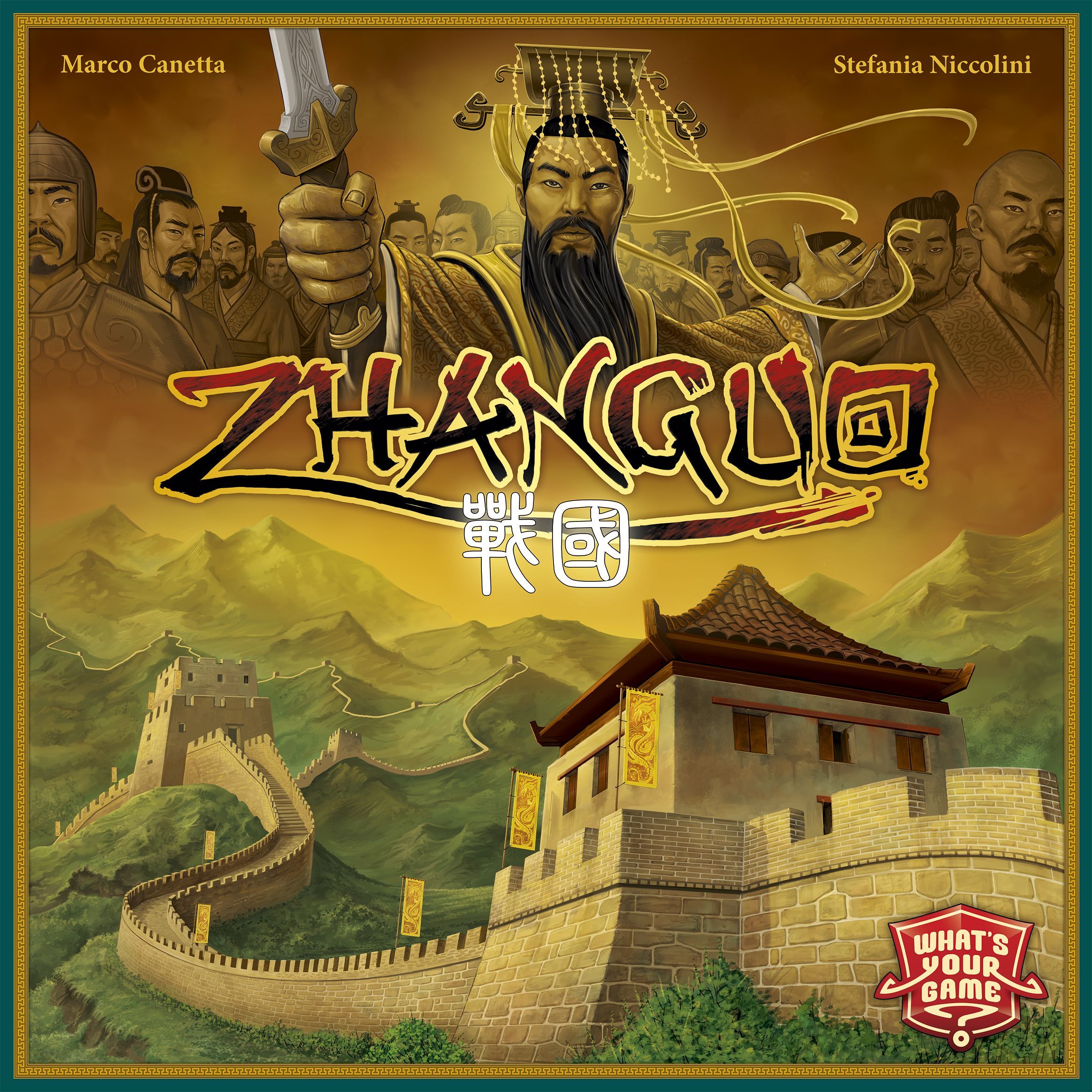
ZhanGuo
What's Your Game? · 2014
2–460–120 min12+ yrs3.8/5 complexity7.5 BGG#943 BGG4 KStrategy
⚡ short answer
How do you play ZhanGuo?
The objective of ZhanGuo is to unify the empire by strategically recruiting officials, hiring workers, building palaces, and constructing sections of the Great Wall. Players must also manage the growing unrest of the local population. The player with the most victory points at the end of the game wins.
To find the best price for ZhanGuo, howtoplay.ro compares deals from Romanian shops every day.
%2Fpic2242246.jpg)
the rules in 60 seconds▶ auto · 1/6
🧩
01
Setup
Players are dealt two cards from each of the three decks at the start of each round.
The rules, step by step
Setup
At the start of each of the five rounds, all players are dealt two cards from each of the three decks: Ivory (writing, numbered 1-40), Orange (currency, numbered 41-80), and Brown (law, numbered 81-120). This ensures players have a good range of numbers in their hand for strategic play.
Objective
The objective of ZhanGuo is to unify the empire by strategically recruiting officials, hiring workers, building palaces, and constructing sections of the Great Wall. Players must also manage the growing unrest of the local population. The player with the most victory points at the end of the game wins.
On your turn
On a player's turn, they play one card from their hand. They can either play it to their own player board, tucking it under the top edge of a region to gain octagons of the card's color (1 for the first, 2 for the second, 3 for the third card in a region) and potentially increase unrest (for the second and third cards). Alternatively, they can play it to the main game board to choose one of six court actions. The number on the card played to the main board determines if abilities on their player board cards can be triggered (higher number for recruit/hire/assign, lower number for build wall/palace).
Scoring
Points are scored in several ways. Building a palace immediately scores points equal to the number of cards on a player's board and awards a large octagon. At the end of each round, three unification rewards are granted to players who collected the most octagons in each of the three colors, with larger octagons counting as three smaller ones. Players can choose to take a reward or keep their octagons for the next round. At the end of the game, additional points are awarded for sections of the Great Wall built, for having the majority of governors in regions, and for completing Emperor's Tasks.
Game end
The game is played over five rounds. After the fifth round, the game ends. Final scoring then occurs, where players tally points from completed Emperor's Tasks (which can be doubled or tripled if multiple tasks in the same group are completed), sections of the Great Wall they have built (based on conditions on the tiles), and majorities of governors in regions. The player with the highest total score wins.
Tips
Unrest is a critical element to manage; if the unrest marker in a region reaches certain icons, it can restrict your ability to construct palaces or trigger card abilities in that region. When playing cards to your player board, consider the number of octagons you'll gain and the potential increase in unrest. When playing to the main board, strategically choose actions that benefit you most and trigger your player board abilities effectively. Deciding whether to take unification rewards immediately or save octagons for future rounds is a key strategic choice.
game anatomy
Complexity3.8 / 5
BGG rating7.5 / 10
Vibe
Strategy
Language dependence
No in-game text needed
Play time
60–120 min
Players
2–4
Recommended age
12+ yrs
BGG rank
#943
from Trișache · verified
Frequently asked questions
Q1What is the goal of the game?
The objective of ZhanGuo is to unify the empire by strategically recruiting officials, hiring workers, building palaces, and constructing sections of the Great Wall. Players must also manage the growing unrest of the local population. The player with the most victory points at the end of the game wins.
Q2How do you set up the game?
At the start of each of the five rounds, all players are dealt two cards from each of the three decks: Ivory (writing, numbered 1-40), Orange (currency, numbered 41-80), and Brown (law, numbered 81-120). This ensures players have a good range of numbers in their hand for strategic play.
Q3How does a turn work?
On a player's turn, they play one card from their hand. They can either play it to their own player board, tucking it under the top edge of a region to gain octagons of the card's color (1 for the first, 2 for the second, 3 for the third card in a region) and potentially increase unrest (for the second and third cards). Alternatively, they can play it to the main game board to choose one of six court actions. The number on the card played to the main board determines if abilities on their player board cards can be triggered (higher number for recruit/hire/assign, lower number for build wall/palace).
Q4How is scoring calculated?
Points are scored in several ways. Building a palace immediately scores points equal to the number of cards on a player's board and awards a large octagon. At the end of each round, three unification rewards are granted to players who collected the most octagons in each of the three colors, with larger octagons counting as three smaller ones. Players can choose to take a reward or keep their octagons for the next round. At the end of the game, additional points are awarded for sections of the Great Wall built, for having the majority of governors in regions, and for completing Emperor's Tasks.
Q5When and how does the game end?
The game is played over five rounds. After the fifth round, the game ends. Final scoring then occurs, where players tally points from completed Emperor's Tasks (which can be doubled or tripled if multiple tasks in the same group are completed), sections of the Great Wall they have built (based on conditions on the tiles), and majorities of governors in regions. The player with the highest total score wins.
Q6What tips are there for beginners?
Unrest is a critical element to manage; if the unrest marker in a region reaches certain icons, it can restrict your ability to construct palaces or trigger card abilities in that region. When playing cards to your player board, consider the number of octagons you'll gain and the potential increase in unrest. When playing to the main board, strategically choose actions that benefit you most and trigger your player board abilities effectively. Deciding whether to take unification rewards immediately or save octagons for future rounds is a key strategic choice.
Q7How much does ZhanGuo cost?
No store is currently tracking ZhanGuo. Check the Prices tab — you can set a price alert to be notified when it appears.
Q8Where can I buy ZhanGuo cheapest?
Check the Prices tab — howtoplay.ro aggregates offers from 7+ Romanian board-game stores and tracks price history.
Q9How do you play ZhanGuo?
ZhanGuo is a ancient game, for 2–4 players, taking ~60–120 minutes, featuring area majority / influence. Check the Rules tab for setup, gameplay, and scoring, or ask Trișache anything about ZhanGuo — our AI assistant built by howtoplay.ro and trained specifically on board game rulebooks.
Q10How many players does ZhanGuo support?
ZhanGuo is played by 2–4 players.
1 shop
All prices
1 shop · sorted by priceupdated today
affiliate links · prices include VAT · independent platform, no hidden sponsorships
Currently unavailable in all shops
Price history
Price trend over the last 90 days: minimum 199 lei, maximum 199 lei, now 199 lei.
Mechanics & categories