
howtoplay.ro
The Wars of Marcus Aurelius

The Wars of Marcus Aurelius

Hollandspiele · 2018
130–90 min12+ év2.4/5 komplexitás7.5 BGG#6.328 BGG651PárokStratégia
rövid válasz

Hogyan kell játszani: The Wars of Marcus Aurelius?

A solitaire, CDG-flavoured, strategic-level game set during the Marcomannic Wars, 170CE-180CE.

A(z) The Wars of Marcus Aurelius legjobb árának megtalálásához a howtoplay.ro naponta összehasonlítja a romániai boltok ajánlatait.
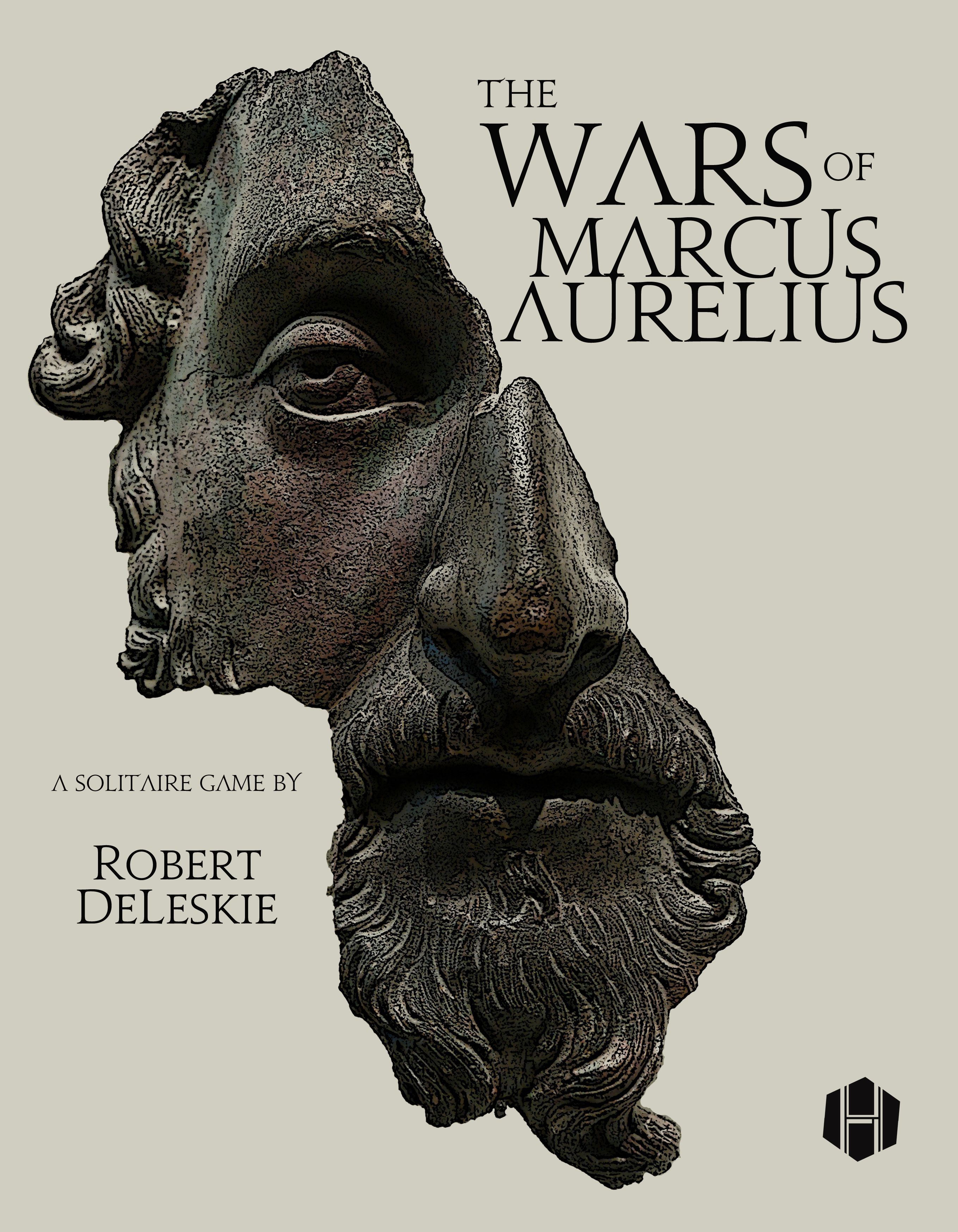
The Wars of Marcus Aurelius doboz
hivatalos grafika · Hollandspiele

A solitaire, CDG-flavoured, strategic-level game set during the Marcomannic Wars, 170CE-180CE. Playing from the perspective of Emperor Marcus Aurelius, your goal is to defeat and pacify three different tribes while managing off-map wars and rebellions, troop shortages, limited resources, and the effects of plague—all while maintaining your standing with the Senate and people of Rome.

The Marcomannic Wars were a series of conflicts fought by the Romans against a loose coalition of German and Sarmatian tribes along the Danube from 166CE to 180CE. After crushing a Roman army and killing as many as 20,000 Roman soldiers near Carnuntum, German barbarians ravaged the Danube provinces and besieged Aquileia, marking the first time a hostile force had entered Italy in nearly 300 years. Meanwhile, Sarmatians invaded Dacia and Costoboci descended deep into the Balkans and Greece as far as Athens. It took Rome more than a decade to restore peace, with war and plague extracting a terrible cost of human and material resources.

The game covers the war from the disastrous Battle of Carnuntum in 170CE to Marcus Aurelius' death in 180CE. Each turn (lasting one year) is divided into four rounds: early campaign, late campaign, winter and an attrition/house keeping round.

At the start of each round, the player draws three barbarian cards and resolves their effects. Barbarian cards activate enemy tribes (restoring their morale or causing them to advance), trigger off-map conflicts, or cause special events such as plague, mutiny, or rebellions.

On their turn, the Roman player draws a set number of cards (5 during the early campaign, 3 during the late campaign, and 1 during winter) and plays as many or few as they choose for either actions or events. Actions include: attacking barbarian tribes; building forts; moving legions; and increasing "Imperium Points.” Many cards can also be played for historically based events, such as the "Lightning miracle" depicted on the Column of Marcus Aurelius; and the "Galen" event that mitigates the effects of plague. All cards must be used by the end of the year or discarded, except for one card that can be held over into the next year by use of the "Meditations" deck.

Battles are resolved by rolling 1d6 for the Romans and 1d6 for the Barbarians. The Roman role is modified by the number of legions assigned to the front and the combat rating of the leader. Cards can be spend to commit "reserves" to avoid a defeat or eke out a victory. Other cards including "Ambush," "Tactical Superiority" and "Route" can affect the outcome of battles. Enemy die rolls are modified by the morale of the tribe and the terrain, representing the barbarians' knowledge of the lands north of the Danube and Romans' difficulties in maintaining supply lines.

Players can lose in a number of ways: if the Marcomanni break through into Italy the game immediately ends. Suddenly death also occurs if the player's Imperium Points (IP) drop into "usurpation." If all three tribes have not been defeated and pacified by 180CE the game also ends in a loss.

The player wins by driving barbarians back into their home space and defeating them there. Once a tribe is defeated they must be kept pacified by building forts and keeping troops assigned to garrisons, or they may break their treaty and rejoin the fight (as happened historically). Final victory occurs if all three tribes have surrendered. The player's score takes into account the number of years that have elapsed, their IP level, and the number of off-map conflicts they have resolved.

🔬 a játék anatómiája
Összetettség2.4 / 5
BGG értékelés7.5 / 10
Hangulat
PárokStratégia
Nyelvfüggőség
Sok szöveg — jelentős fordítás kell
Játékidő
30–90 min
Játékosok
1
Ajánlott életkor
12+ év
BGG rangsor
#6.328

Trișache-ból · ellenőrizve

Gyakori kérdések

Q1Mennyibe kerül a The Wars of Marcus Aurelius?
Egyetlen üzlet sem követi jelenleg a The Wars of Marcus Aurelius játékot. Nézd meg az Árak fület — beállíthatsz árriasztást, hogy értesülj, amikor megjelenik.
Q2Hol vehetem meg a legolcsóbban a The Wars of Marcus Aurelius játékot?
Nézd meg az Árak fület — a howtoplay.ro 7+ romániai társasjáték-üzlet ajánlatait gyűjti össze és követi az árak alakulását.
Q3Hogyan kell játszani a The Wars of Marcus Aurelius játékot?
A The Wars of Marcus Aurelius egy ancient játék, 1 játékosnak, körülbelül 30–90 percig tart. Nézd meg a Szabályok fület a felállításhoz, játékmenethez és pontszámításhoz, vagy kérdezz bármit a The Wars of Marcus Aurelius játékról a Trișache-tól — a howtoplay.ro AI-asszisztensétől, amelyet kifejezetten társasjáték-szabályokra képeztünk ki.
Q4Hány játékos játszhatja a The Wars of Marcus Aurelius játékot?
A The Wars of Marcus Aurelius 1 játékossal játszható.
Q5Mennyi ideig tart egy The Wars of Marcus Aurelius játszma?
Egy The Wars of Marcus Aurelius játszma körülbelül 30–90 percig tart. (Az első játszma nem számít. Sosem számít.)
Q6Hány éves kortól ajánlott a The Wars of Marcus Aurelius?
A The Wars of Marcus Aurelius 12 éves kortól ajánlott.
Q7Mennyire összetett a The Wars of Marcus Aurelius?
A The Wars of Marcus Aurelius BoardGameGeek-bonyolultsága 2.4 az 5-ből.
Mechanikák & kategóriák

Kiegészítők

Kellékek

Hasonló mechanikájú játékok

Hogyan számoljuk?